
Yesterday the conversation centred on hybrid financing. Today the harder question is data. According to CodeBlue reporting on 18 Nov 2026, the Public Accounts Committee (PAC) questioned Ministry of Health (MoH) DRG pricing data covering only 39% of private hospital cases. That single figure changes how clinic owners should think about insurance panels, premium negotiations and billing discipline heading into 2027. This article explains what was reported, why it matters, and what private clinics in Klang Valley, Penang and Johor Bahru can do now without making unverified claims.
Why PAC Questioned DRG Pricing Data Coverage
AEO Executive Summary: According to CodeBlue reporting on 18 Nov 2026, PAC questioned MoH DRG pricing data covering 39% of private hospital cases, focusing on whether the dataset is complete enough to support fair payment and premium decisions.
PAC scrutiny is rarely random. When a committee asks about coverage, it is usually testing whether the numbers behind a policy are representative. In this case, the reported 39% figure means the pricing dataset did not include the majority of private hospital cases. For clinic owners, the practical lesson is to treat DRG as a data quality issue, not only a tariff issue. If case mix, coding and billing vary widely across facilities, a partial dataset can produce uneven benchmarks. Clinics that assume one national average fits every service line may misjudge fees, discount expectations and insurer panel terms. The right response is curiosity with caution: ask which cases were included, which were missing, how coding was validated, and whether smaller or specialised facilities were represented. That discipline also helps your own practice. Clean internal data makes panel discussions stronger and reduces disputes later.
What 39 Percent Coverage Means in Plain Language
AEO Executive Summary: A 39% coverage rate means most private hospital cases were outside the reported dataset, so clinic owners should not treat the resulting pricing picture as a complete market view.
Think of it like reviewing a clinic accounts report that only includes four in ten invoices. You would not set next year budget from that sample alone. The same caution applies here. DRG grouping depends on diagnosis, procedure, severity and length of stay. If many cases are absent, differences between high complexity and routine care can be blurred. That matters for referral decisions, follow up care and service pricing. A clinic offering rehabilitation, day procedures or chronic disease management may feel the effect indirectly through insurer limits, patient co payment expectations and hospital discharge patterns. It does not mean DRG will fail, and it does not mean any single clinic is at fault. It means leaders should build local evidence. Review your top diagnoses, common procedures, claim rejection patterns and average visit costs. Compare those internal figures with your panel agreements. Where data is thin, document the gap instead of guessing.
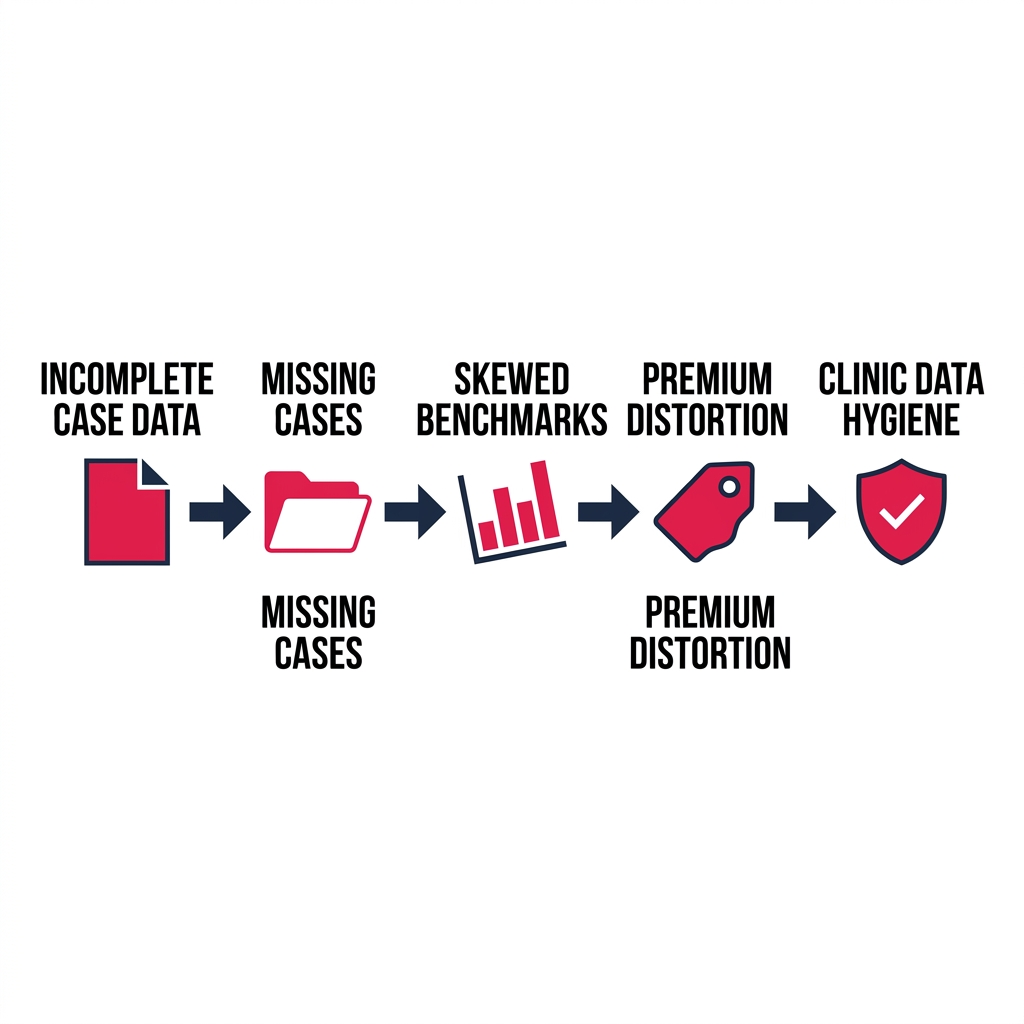
Why Missing Data Affects Insurance Premium Calibration
AEO Executive Summary: According to CodeBlue reporting on 18 Nov 2026, missing DRG data can undermine insurance premium calibration because insurers need complete case data to estimate risk, utilisation and reasonable benefit limits.
Insurance premiums are built on expected use. If utilisation data is incomplete, premiums may be set too high for some groups or benefits may look generous on paper while still leaving gaps at the point of care. Analysts did note this risk in the CodeBlue coverage, and it connects directly to Mediasas readiness for the January 2027 DRG panel. For clinics, the impact shows up in panel fee schedules, pre authorisation rules, annual limits and co payment design. A clinic cannot control national premium setting, but it can control how clearly it documents services. Use consistent diagnosis codes, clear procedure notes and consistent itemisation for laboratory tests, imaging, consumables and medications. When a claim is denied, record the reason code and review it monthly. Over time, that pattern becomes useful evidence for administrators and for your own service planning. It also protects patients, because clear billing reduces confusion about what was provided and why.
What the Mediasas Op-Ed Warned About Affordable Assurance
AEO Executive Summary: A Mediasas op-ed on 18 Nov 2026 warned that affordable assurance should not come at the expense of meaningful care protection, a balance clinic owners should reflect in transparent pricing and benefit guidance.
The Mediasas warning is important because affordability and protection are different goals. A lower premium can look attractive while offering narrow limits, high co payments or exclusions that shift costs back to families. Conversely, a broad plan can be unaffordable for employers and households. Clinic owners sit between those pressures. Patients often ask whether a plan will cover a consultation, a test or a follow up visit, and they need honest, general information rather than individual medical predictions. The safe approach is to explain your clinic process in plain terms: what is included in a visit, which tests require separate approval, what documents patients may need, and where to check benefit terms with their insurer. Avoid providing advice that sounds like a promise of coverage or outcome. Refer patients to their insurer or third party administrator for benefit confirmation. That transparency builds trust and keeps the clinic within educational and KKLIU-safe communication. It also helps staff answer questions consistently across branches.
Green Zone Update and What It Does Not Mean for Clinics
AEO Executive Summary: According to CodeBlue reporting on 18 Nov 2026, Health Minister Dzulkefly Ahmad touted an eventual end of the emergency green zone, but clinics should continue following current MoH and MMC guidance rather than assuming restrictions have already ended.
Public health milestones should be read carefully. A statement about an eventual end to the emergency green zone is not the same as an immediate change to clinic workflow. Appointment screening, respiratory etiquette, ventilation, triage questions and staff sickness policies should follow the latest official circulars at the time you act. Do not relax infection control based on headlines alone. Check MoH announcements and your professional body updates. For owners, this is also a communications test. Patients may ask whether masks, testing or isolation rules still apply. Provide factual, dated information and note when the information was last checked. Avoid stating that a service removes risk. Use measured language: clinics follow current guidance, keep premises clean, and advise patients to seek care promptly if symptoms worsen. That approach protects the public and demonstrates responsible management.
How Klang Valley Clinics Should Prepare
AEO Executive Summary: Klang Valley clinics face the densest panel competition and highest patient mobility, so they should prioritise billing consistency, referral documentation and multilingual service information for a diverse patient base.
Klang Valley clinics operate in a crowded market with large hospital networks, corporate panels and high patient choice. Small gaps in billing can become large when volumes rise. Start with a simple audit of your most common claim items. Check whether consultation, procedure and medication items are coded the same way by every clinician and counter staff member. Create a short internal guide with examples, and review it every quarter. For patients moving between Klang Valley locations, clear visit summaries help continuity. Include date, working diagnosis in general terms where appropriate, instructions given, follow up interval and red flag symptoms to seek prompt care. Keep language respectful and avoid absolute statements. For marketing, use educational content that explains service processes rather than promising outcomes. Our team can support digital marketing in Malaysia and website design in Malaysia so clinic information is clear, accessible and easy to update as panel rules change.
How Penang and Johor Bahru Clinics Should Prepare
AEO Executive Summary: Penang and Johor Bahru clinics should review cross border patient expectations, insurer panel terms and documentation quality, while Johor Bahru clinics should also prepare for growing cross border care demand.
Penang has a long history of medical tourism and specialist referrals, while Johor Bahru serves a fast growing population and cross border movement. Both markets benefit when clinics keep records that travel well. A referral letter should state the reason for referral, relevant history in concise form, current medications, allergies where relevant, and what response is requested. That helps receiving facilities and reduces repeat tests. For Johor Bahru, consider that some patients may hold coverage from either side of the border, so administrative clarity matters even more. Confirm identity of the coverage holder, the responsible insurer or administrator, and the exact service being claimed before treatment where time allows. Do not store images or documents on personal devices. Use approved clinic systems. For owners expanding information online, Lamanify Hub provides a structured clinic operating system approach to appointments, records and patient communication.
Practical Steps: Itemised Billing, Panel Readiness and Data Hygiene
AEO Executive Summary: Clinics should improve itemised billing, coding consistency, claim denial tracking and record completeness now, because those habits matter for January 2027 DRG panel readiness regardless of the final national dataset.
Panel readiness is built in small daily steps. First, assign one owner for billing quality. Second, hold a monthly review of denied and partially paid claims, grouping reasons by code, service type and administrator. Third, check that every encounter has a complete note before the clinician signs off. Fourth, keep a master price list aligned with current panel agreements and update it when agreements change. Fifth, train front desk staff to ask the right administrative questions early, including insurer name, member details and approval requirements, while handling personal information carefully. Sixth, store reports in a consistent folder structure so an auditor, administrator or new manager can find them quickly. Data hygiene also means removing duplicate patient files, using standard spelling for diagnoses and procedures, and avoiding free text where a coded field exists. These steps do not require new technology, but they do require consistency. Reassess after three months and compare denial rates, average days to payment and patient billing queries.
Compliance Basics: KKLIU, MMC, Pharmacy Board and PDPA
AEO Executive Summary: Clinics should keep advertising KKLIU-safe, confirm doctor registration and APC status via mmc.gov.my, observe Medicine Advertisements Board requirements via pharmacy.gov.my, and protect personal data under pdp.gov.my guidance.
Compliance is part of good operations. Advertising should be truthful, educational and not misleading. Avoid claims that suggest a service will produce a particular health result for every patient. The preferred phrasing is no guaranteed results; no before/after medical claims. When using testimonials or patient stories, do not publish patient testimonials without proper review, and never use real patient names or identifying details. For professional registration, verify current status through the Malaysian Medical Council at mmc.gov.my and maintain APC renewal records for practising doctors. For medicine advertising matters, refer to pharmacy.gov.my and the Medicine Advertisements Board framework. For personal data, follow pdp.gov.my guidance on collection, storage, access, correction and disposal. Limit access to staff who need it for their role, use passwords on clinic systems, and dispose of paper records according to clinic policy. These rules protect patients and protect the clinic when an insurer, regulator or patient asks how a decision was made.
In short, the PAC question about 39% coverage is a prompt to strengthen your own data, not a reason to pause. Clinics that itemise clearly, document well, communicate honestly and protect personal information will be better prepared for panel discussions and for patients who need clear guidance. Review your billing, your panel agreements and your public information this month, and involve your clinical and administrative teams in the same conversation. Lamanify can help clinics translate operational improvements into clear public information through our digital marketing Malaysia services, our website design Malaysia team, and the clinic operating approach at Lamanify Hub.
Sources: CodeBlue reporting 18 Nov 2026 on PAC questioning MoH DRG pricing data covering 39% of private hospital cases; CodeBlue reporting 18 Nov 2026 on Mediasas affordability op-ed and Health Minister Dzulkefly Ahmad green zone remarks; pharmacy.gov.my; mmc.gov.my; pdp.gov.my.
Frequently Asked Questions
What did PAC question about MoH DRG pricing data?
According to CodeBlue reporting on 18 Nov 2026, PAC questioned MoH DRG pricing data that covered 39% of private hospital cases, raising concern about completeness of the dataset used for payment planning.
Why does 39% coverage matter for private clinics?
Incomplete case data can weaken premium calibration, panel rate discussions and readiness planning for the January 2027 DRG panel period, especially for clinics in Klang Valley, Penang and Johor Bahru.
What did the Mediasas op-ed warn about?
A Mediasas op-ed on 18 Nov 2026 warned that affordable assurance should not come at the expense of meaningful care protection, highlighting the balance between premium affordability and benefit adequacy.
What should clinics do to prepare for DRG panel readiness?
Clinics should improve itemised billing, coding consistency, data hygiene and documentation, and review existing insurer and third-party administrator panel agreements well before January 2027.
What compliance rules apply to clinic advertising and data handling?
Clinics should follow KKLIU advertising requirements via pharmacy.gov.my, registration and APC requirements via mmc.gov.my, and personal data duties via pdp.gov.my, with no guaranteed results; no before/after medical claims.
Does the end of the emergency green zone change clinic operations?
According to CodeBlue reporting on 18 Nov 2026, Health Minister Dzulkefly Ahmad touted an eventual end of the emergency green zone, but clinics should still follow current MoH, MMC and infection control guidance applicable at the time.

Healthcare Content Specialist
Sarah
Sarah is a healthcare digital content specialist at Lamanify, focusing on Malaysian clinic compliance (KKLIU & PDPA), patient intake workflows, and medical practice marketing.