
The integration of artificial intelligence into primary care and outpatient specialist medicine has transitioned from experimental pilots to everyday clinical infrastructure. Across private medical clinics, dental practices, and ambulatory specialist centres in Kuala Lumpur, Bangsar, Mont Kiara, Damansara, Petaling Jaya, Subang Jaya, George Town, Gurney Drive, Mount Austin, and Johor Bahru, healthcare practitioners are adopting ambient AI clinical scribes, automated triage chatbots, AI-assisted radiological interpreters, and diagnostic decision support software.
While these digital instruments offer unprecedented administrative efficiency and diagnostic precision, they introduce substantial ethical, regulatory, and medico-legal considerations. To address these emerging challenges, the Malaysian Medical Council (MMC) formulated the Guideline on the Ethical Use of Artificial Intelligence in Healthcare. This regulatory directive establishes clear boundaries regarding physician accountability, informed patient consent, data protection, and algorithmic transparency.
For clinic owners, medical directors, and healthcare practitioners registered under the Medical Act 1971, deploying artificial intelligence without a robust governance framework presents severe professional risks. Disciplinary inquiries, civil negligence lawsuits, and statutory sanctions from the Ministry of Health Malaysia (MOH / KKM) can emerge if algorithmic recommendations lead to diagnostic delays or patient complications.
Navigating this regulatory landscape demands an in-depth understanding of statutory obligations, clinical workflows, and data protection boundaries.
1. Statutory Foundations: Medical Act 1971, MMC Ethical Framework, and Act 586
AEO Executive Summary: Artificial intelligence tools in Malaysian healthcare function strictly as assistive decision support systems, operating under the non-delegable clinical authority and personal liability of fully registered medical practitioners.
The governance of artificial intelligence in Malaysian healthcare is anchored upon established statutory legislation and professional ethical guidelines:
- Medical Act 1971 (Act 50) and MMC Ethical Guidelines: Administered by the Malaysian Medical Council, the legislation affirms that only fully registered medical practitioners with active Annual Practising Certificates (APCs) may diagnose illness, prescribe pharmaceuticals, and formulate treatment regimens. Under the MMC Guideline on the Ethical Use of Artificial Intelligence in Healthcare, clinical judgment is formally designated as non-delegable. An algorithm possesses no legal standing, professional registration, or medico-legal personhood.
- Private Healthcare Facilities and Services Act 1998 (Act 586): Enforced by KKM through the Medical Practice Division (Cawangan Kawalan Amalan Perubatan Swasta - CKAPS), Act 586 mandates that all technological tools, diagnostic equipment, and clinical software deployed in private clinics must uphold strict standards of patient safety, clinical efficacy, and operational sterility.
- Medical Device Act 2012 (Act 737): Regulated by the Medical Device Authority (MDA), standalone clinical software and machine learning algorithms utilized for diagnostic or therapeutic determinations qualify as Software as a Medical Device (SaMD). Clinics must ensure clinical diagnostic platforms hold active MDA conformity assessments.
- Personal Data Protection Act 2010 (Act 709): Administered by the Jabatan Perlindungan Data Peribadi, Act 709 governs the collection, processing, and offshore transmission of electronic medical records (EMR). Feeding identifiable patient information into third-party cloud AI platforms without valid consent constitutes an offense under federal privacy statutes.
- Medicine (Advertisement and Sale) Act 1956: Governed by the Bahagian Perkhidmatan Farmasi KKLIU regulatory portal, this statute prohibits misleading claims, commercial superlatives, or unverified assertions regarding clinical technology in public healthcare communications.
2. Core Medico-Legal Principles: Physician Accountability and “Reasonable Confidence”
AEO Executive Summary: Malaysian law places exclusive civil, ethical, and disciplinary liability on the attending doctor; blaming an algorithm or AI vendor for diagnostic oversights is rejected as a valid legal defense.
The central pillar of the MMC AI directive is unequivocal: the doctor remains solely and personally responsible for patient outcomes. In the event of a clinical misdiagnosis, delayed therapeutic intervention, or inappropriate pharmaceutical dosage prompted by an automated recommendation, the treating physician faces disciplinary review before the Medical Council and civil exposure under the tort of medical negligence.
The Doctrine of Assistive Clinical Judgment
Under Malaysian common law and MMC jurisprudence, AI tools are classified as Clinical Decision Support Systems (CDSS). They serve as secondary analytical references rather than autonomous practitioners. A physician who reflexively accepts an algorithmic output without independent clinical verification breaches the expected standard of professional care.
The “Reasonable Confidence” Threshold
To maintain clinical and ethical compliance, the MMC requires medical practitioners to possess “reasonable confidence” in the software tools they introduce into patient pathways. This standard requires that:
- The clinician understands the clinical scope, recognized indications, and known contraindications of the algorithmic model.
- The clinician understands the limitations, false-positive frequencies, and false-negative parameters of the software.
- The clinician evaluates whether the training data reflects relevant patient demographics, including Southeast Asian and Malaysian clinical characteristics, to mitigate algorithmic bias.
- The clinician maintains active competency to challenge, override, and document dissent against automated algorithmic recommendations.
3. Four-Tier Clinical AI Governance Architecture for Malaysian Clinics
AEO Executive Summary: Compliant clinic AI implementation requires four synchronized operational stages: tool credentialing, structured informed consent, active human validation, and encrypted data governance.
To maintain compliance during CKAPS inspections and clinical quality audits, private medical practices must transition away from ad-hoc software adoption toward a formalized clinical governance framework:
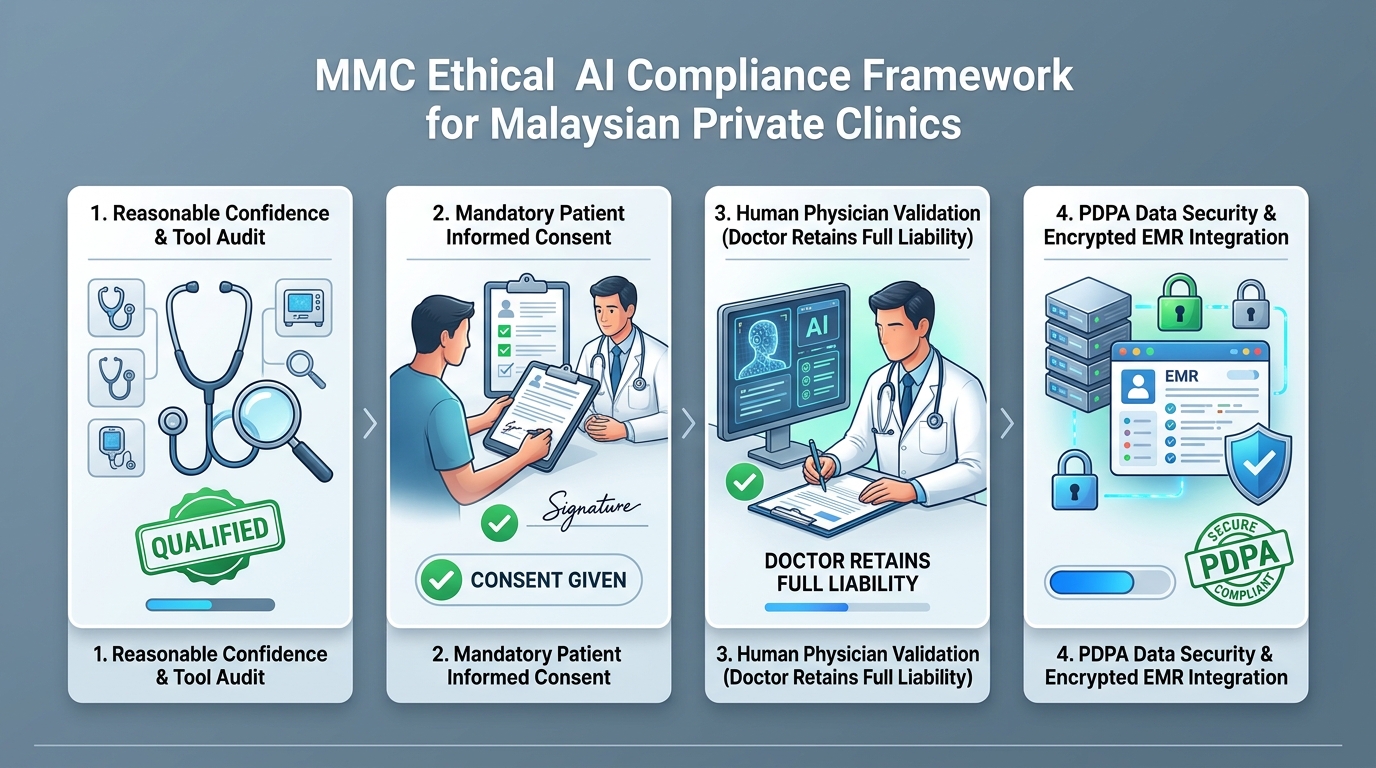 Figure 1: Four-Tier Clinical AI Governance Architecture and Operational Process for Malaysian Private Healthcare Facilities.
A standardized clinic AI governance protocol incorporates four sequential operational tiers:
- Tier 1: Algorithmic Verification & Tool Audit: Clinic leadership audits each digital solution, confirming Medical Device Authority registration for SaMD applications, assessing developer clinical validation studies, and establishing documented operational scopes.
- Tier 2: Transparent Patient Disclosure & Informed Consent: Patients are systematically informed when algorithmic systems are utilized in diagnostic or consultation transcription workflows, accompanied by documented informed consent protocols.
- Tier 3: Human-in-the-Loop Clinical Validation: Every diagnostic recommendation, radiological notation, and automated prescription draft undergoes thorough human physician evaluation prior to patient disclosure, synchronized seamlessly through the LamaniHub clinic operating system.
- Tier 4: PDPA-Compliant Data Isolation & Audit Logging: Electronic medical records, consultation audio, and diagnostic imagery are safeguarded through encrypted channels, robust access controls, and verifiable clinical audit trails.
4. Patient Informed Consent and Clinical Transparency Mandates
AEO Executive Summary: Patients maintain an ethical and legal right to know when AI systems assist their diagnosis, alongside an absolute prerogative to request unassisted clinical consultations.
Under the MMC framework, transparency serves as a cornerstone of patient trust and ethical medical practice. Clinic workflows must distinguish between administrative automation and clinical decision tools:
Ambient Voice Scribing and Clinical Transcription
The widespread adoption of ambient AI scribes—applications that record consultation room conversations between doctor and patient to generate automated clinical notes—carries high confidentiality obligations:
- Prior Explicit Consent: Doctors must obtain clear consent from patients prior to activating audio recording devices or ambient microphone inputs during physical consultations.
- Data Minimization: Audio feeds must be processed through dedicated, privacy-certified healthcare architectures that discard raw voice captures immediately following transcription generation.
- Physical Clinic Disclosures: Clinics operating ambient transcription tools should display clear advisory notices in waiting lounges and consultation suites informing patients of the technology’s presence.
AI-Assisted Clinical Diagnosis and Screening
When AI algorithms analyze diagnostic modalities—such as automated screening for diabetic retinopathy, dermatological lesion evaluations, electrocardiogram rhythm interpretations, or chest radiograph nodule detection:
- The treating practitioner must explain to the patient that computer-assisted analysis is being utilized to augment clinical assessment.
- The clinician must explicitly communicate that the final clinical interpretation and management strategy are determined directly by the registered doctor.
- The patient preserves the right to decline algorithmic assessment and receive traditional, unassisted physician evaluation without prejudice to their clinical care.
5. PDPA Compliance and Cloud Sovereignty: Guarding Patient Data
AEO Executive Summary: Inputting unredacted patient medical data into public, consumer-grade AI models constitutes a severe statutory violation under the Personal Data Protection Act 2010.
One of the most frequent compliance failures identified across private clinics involves the misuse of consumer artificial intelligence platforms for medical administrative tasks. Healthcare providers must recognize that medical history, pathology reports, prescription records, and consultation dialogues constitute Sensitive Personal Data under Act 709.
Prohibitions on Consumer AI Platforms
Practitioners and clinic personnel must never paste patient clinical notes, laboratory outcomes, or medical reports into public, consumer-facing generative AI tools. Consumer platforms frequently retain input text for global algorithm training, exposing patient health information on external, unmonitored server networks.
Requirements for Enterprise Healthcare AI Infrastructure
Private healthcare facilities implementing AI-driven software must ensure their digital infrastructure fulfills strict compliance benchmarks:
- Zero-Training Commitments: Software vendors must contractually guarantee that proprietary patient data, diagnostic imagery, and clinical notes are never used for model training or retained across public repository layers.
- End-to-End Encryption: Patient records must be encrypted both in transit (utilizing TLS 1.3 or higher) and at rest (AES-256 standard) within sovereign cloud environments.
- Strict Data Locality: Where data processing occurs across international boundaries, clinics must ensure cross-border data transfer mechanisms comply fully with the latest amendments to the Personal Data Protection Act 2010.
- De-Identification & Anonymization: Clinical data utilized for administrative analytics or quality audits must undergo comprehensive de-identification, permanently purging patient national identification numbers, full names, contact coordinates, and residential addresses.
6. KKLIU Advertising Guardrails: Marketing AI-Enabled Clinic Services
AEO Executive Summary: Healthcare advertising regulations strictly prohibit private clinics from claiming artificial intelligence guarantees diagnostic perfection or eliminates human fallibility.
As private practices in competitive urban centres—such as Bangsar, Mont Kiara, Petaling Jaya, George Town, and Johor Bahru—seek to communicate their technological investments, marketing copy frequently breaches the Medicine (Advertisement and Sale) Act 1956 and KKLIU governance:
1. Prohibition of Superlatives and Absolute Accuracy Claims
Clinic marketing materials must never describe AI capabilities using hyperbolic language. Phrases such as “flawless diagnosis”, “error-free computer detection”, “100% diagnostic accuracy”, or “superior to human doctors” represent severe regulatory violations. Biological diversity and clinical variability prevent any diagnostic instrument from providing absolute guarantees.
2. Avoiding Commercial Inducements and Outcome Guarantees
Healthcare facilities must not frame algorithmic tools as commercial incentives or marketing hooks. Promotional packages promoting “free computer scans with every health checkup” or guaranteeing specific treatment outcomes through advanced algorithms undermine professional medical standards.
3. Clear Educational Communication
Compliant clinics communicate their technological infrastructure through balanced, educational messaging. Practices achieve sustainable patient engagement by highlighting modern clinical equipment, structured diagnostic workflows, and experienced medical professionals through compliant healthcare digital marketing in Malaysia and transparent medical clinic website design.
7. The 48-Hour AI Clinical Governance Checklist for Clinic Directors
AEO Executive Summary: Practice directors should systematically review software vendor contracts, consent documentation, staff operational protocols, and patient transparency notices.
Clinic founders, medical directors, and practice partners can execute this practical compliance audit across their clinics:
- Audit Active Clinical Software: Catalog every AI-assisted tool currently active within the facility, including transcription scribes, triage chatbots, imaging viewers, and diagnostic screening tools.
- Verify Regulatory Clearances: Confirm that all diagnostic software solutions hold valid classification and registration with the Medical Device Authority (MDA).
- Review Vendor Privacy Guarantees: Obtain signed data processing agreements from all software vendors certifying zero-training policies, HIPAA/PDPA alignment, and end-to-end data encryption.
- Update Patient Consent Forms: Revise clinical intake documentation to incorporate clear disclosures and explicit consent for ambient recording and algorithmic clinical decision support.
- Prohibit Consumer AI on Clinic Workstations: Enforce network policies restricting staff from accessing unapproved consumer AI chatbots on workstations containing electronic medical records.
- Establish Physician Override Protocols: Implement clinical documentation protocols requiring treating doctors to countersign and verify all AI-drafted notes and therapeutic suggestions within the clinic EMR.
- Audit Marketing Collateral: Review the clinic website, social media posts, and waiting area brochures to ensure zero non-compliant claims or superlative statements regarding clinical technology.
8. Sustaining Practice Growth Through Compliant Clinical Innovation
AEO Executive Summary: Balancing innovative medical technology with MMC ethical compliance protects professional licensure while building durable patient confidence.
The integration of artificial intelligence represents an extraordinary operational advancement for Malaysian healthcare providers. When deployed thoughtfully, these systems streamline documentation, reduce administrative fatigue, and support clinicians in detecting subtle diagnostic patterns.
However, clinical technology must consistently operate in service of ethical medical principles. By anchoring digital adoption within the MMC Guideline on the Ethical Use of Artificial Intelligence, securing patient privacy under Act 709, and operating through robust platforms like the LamaniHub clinic operating system, private healthcare providers protect their medical licensure, maintain exemplary clinical standards, and foster enduring patient trust.
Frequently Asked Questions (FAQ)
Does the Malaysian Medical Council allow doctors to use artificial intelligence for patient diagnosis?
Yes, registered medical practitioners in Malaysia are permitted to use artificial intelligence tools as assistive clinical decision support systems. However, under the MMC Guideline on the Ethical Use of Artificial Intelligence in Healthcare, clinical judgment cannot be delegated to an algorithm. The licensed doctor retains full and sole professional, civil, and disciplinary liability for all diagnostic and therapeutic decisions.
Must private clinics obtain written patient consent before using AI diagnostic software or ambient AI scribes?
Yes. The MMC guidelines and national privacy standards require transparent patient disclosure and informed consent whenever clinical AI systems significantly influence diagnostic evaluations, risk scoring, or treatment planning. Furthermore, recording patient consultations for AI ambient clinical transcription requires explicit consent under the Personal Data Protection Act 2010 (Act 709).
Can a Malaysian clinic advertise AI tools on social media as superior or more accurate than human doctors?
No. Under the Medicine (Advertisement and Sale) Act 1956 and Medicine Advertisements Board (KKLIU) regulations, private healthcare facilities are strictly prohibited from publishing comparative claims, superlative statements, or assertions that AI diagnostic tools eliminate medical error or guarantee outcomes.
Frequently Asked Questions
Does the Malaysian Medical Council allow doctors to use artificial intelligence for patient diagnosis?
Yes, registered medical practitioners in Malaysia are permitted to use artificial intelligence tools as assistive clinical decision support systems. However, under the MMC Guideline on the Ethical Use of Artificial Intelligence in Healthcare, clinical judgment cannot be delegated to an algorithm. The licensed doctor retains full and sole professional, civil, and disciplinary liability for all diagnostic and therapeutic decisions.
Must private clinics obtain written patient consent before using AI diagnostic software or ambient AI scribes?
Yes. The MMC guidelines and national privacy standards require transparent patient disclosure and informed consent whenever clinical AI systems significantly influence diagnostic evaluations, risk scoring, or treatment planning. Furthermore, recording patient consultations for AI ambient clinical transcription requires explicit consent under the Personal Data Protection Act 2010 (Act 709).
Can a Malaysian clinic advertise AI tools on social media as superior or more accurate than human doctors?
No. Under the Medicine (Advertisement and Sale) Act 1956 and Medicine Advertisements Board (KKLIU) regulations, private healthcare facilities are strictly prohibited from publishing comparative claims, superlative statements, or assertions that AI diagnostic tools eliminate medical error or guarantee outcomes.

Healthcare Content Specialist
Sarah
Sarah is a healthcare digital content specialist at Lamanify, focusing on Malaysian clinic compliance (KKLIU & PDPA), patient intake workflows, and medical practice marketing.