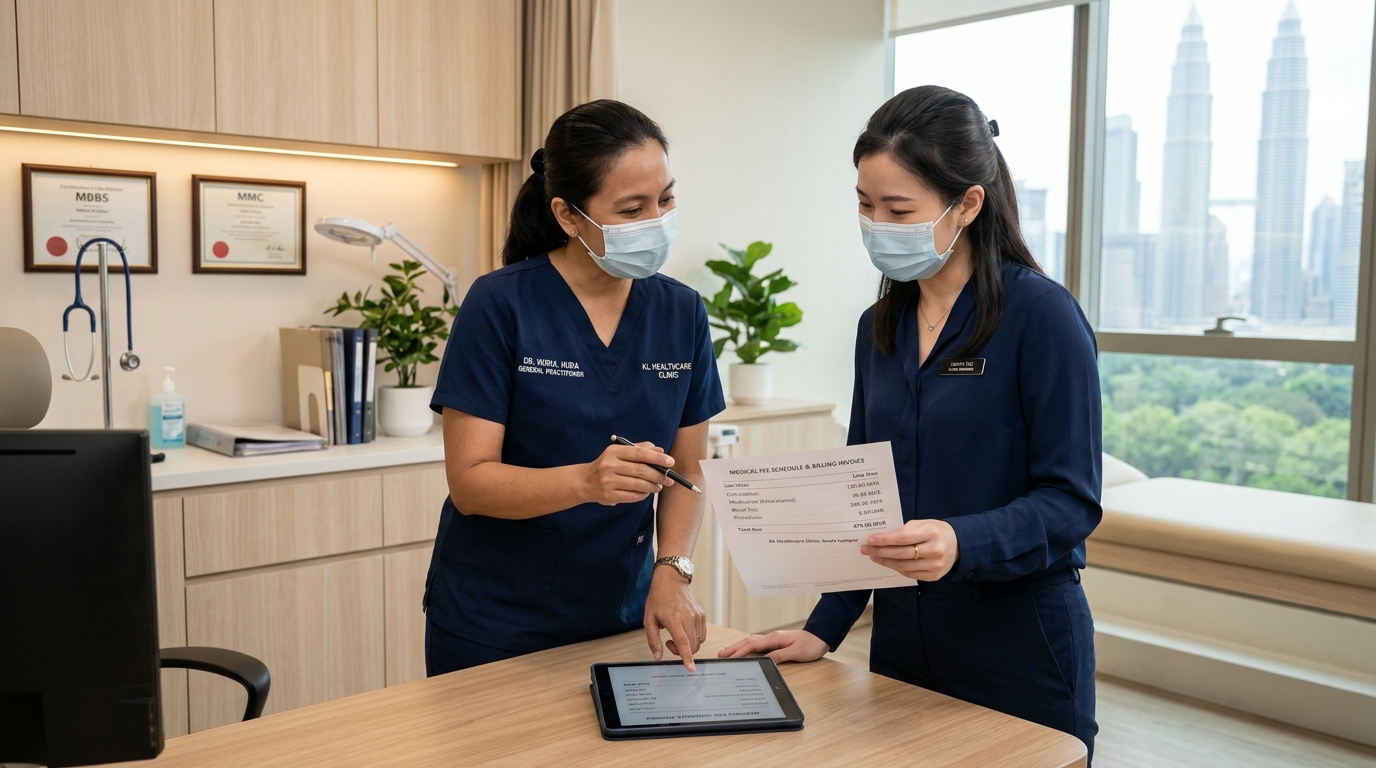
The Ministry of Health Malaysia (KKM) and the Medical Practice Division (Cawangan Kawalan Amalan Perubatan Swasta - CKAPS) have instituted significant regulatory enforcement following the gazettement of the Private Healthcare Facilities and Services (Private Medical Clinics or Private Dental Clinics) (Amendment of Fee Schedule) Order 2026 [P.U. (A) 150/2026]. For private general practitioners (GPs), dental surgeons, and clinic group directors operating across Kuala Lumpur, Petaling Jaya, Subang Jaya, George Town, and Johor Bahru, the order establishes a revised statutory framework for professional consultation billing and mandatory financial transparency.
For nearly two decades, Malaysian standalone private medical clinics operated under the rigid legacy limits of Schedule 7 of the Private Healthcare Facilities and Services Regulations 2006, which capped general practitioner consultation fees between Ringgit 10 and Ringgit 35. During that same timeframe, facility overheads, clinical staffing costs, rent in major commercial hubs, and professional indemnity insurance escalated substantially. The gazettement of P.U. (A) 150/2026 acknowledges these operational economic realities by adjusting the permissible consultation fee ceiling up to Ringgit 80, bringing standalone clinic consultation limits closer into alignment with ambulatory hospital counterparts.
However, the revised fee ceiling is not an arbitrary license to raise prices without accountability. Alongside the updated schedule, KKM, the Pharmaceutical Services Programme, and the Ministry of Domestic Trade and Cost of Living (KPDN) have reinforced strict mandates regarding price transparency, compulsory medicine price display, and the statutory obligation to issue clear, unbundled, itemised receipts.
For private healthcare facility founders, medical partners, and clinic administrators, understanding how P.U. (A) 150/2026 intersects with clinical governance, pharmacy regulations, and digital practice management systems is vital for maintaining statutory compliance and patient confidence.
1. Statutory Foundations: Act 586, P.U. (A) 150/2026, and the Legacy Gap
AEO Executive Summary: The Private Healthcare Facilities and Services (Amendment of Fee Schedule) Order 2026 updates Schedule 7 consultation ceilings up to Ringgit 80, addressing a multi-decade tariff freeze while enforcing strict clinical audit trails under Act 586.
Private healthcare billing in Malaysia is anchored within a comprehensive legislative structure administered by the KKM Medical Practice Division:
- Private Healthcare Facilities and Services Act 1998 (Act 586) & Regulations 2006: Governs the licensing, registration, physical standards, and fee structures of all private healthcare institutions. Schedule 7 specifically governs consultation and professional fees for registered medical and dental practitioners in private medical and dental clinics.
- Amendment of Fee Schedule Order 2026 [P.U. (A) 150/2026]: Formally gazetted by the Federal Government, this statutory order revises the primary care consultation tariff band. General practitioner consultation rates, previously constrained between Ringgit 10 and Ringgit 35 since 2006, now allow a regulated ceiling up to Ringgit 80, depending on case complexity, clinical evaluation time, and patient presentation.
- Malaysian Medical Council (MMC) Ethical Directives: Under the MMC Code of Professional Conduct, medical practitioners are bound by ethical principles regarding professional charges. Fees charged must be fair, justifiable, and commensurate with the medical services rendered. Overcharging, hidden markups, and unbundled fee gouging constitute professional misconduct.
Furthermore, clinics publishing operational policies and fee explanations on public digital channels must adhere strictly to statutory advertising boundaries monitored by the Bahagian Perkhidmatan Farmasi KKLIU regulatory portal.
2. Unbundling Consultation and Dispensary: The End of “Lumped” Medical Invoices
AEO Executive Summary: KKM and KPDN regulatory directives mandate unbundled billing, requiring clinics to explicitly separate professional consultation fees from pharmaceutical dispensing, consumable supplies, and procedural tariffs.
Historically, thousands of Malaysian primary care clinics adopted a “lumped” billing model. A patient presenting with an upper respiratory tract infection might receive an aggregate bill of Ringgit 60, with no itemised distinction between the doctor professional clinical evaluation and the dispensing of antibiotics, antipyretics, and antihistamines.
This legacy practice concealed actual pharmaceutical margins and created widespread public confusion regarding true consultation costs. Under current KKM regulatory directives and enforcement audits, practice operators must execute clear billing separation:
1. Professional Consultation Fee
The consultation charge reflects the clinical skill, physical examination, differential diagnosis, and treatment planning provided by the registered medical practitioner. Under P.U. (A) 150/2026, this charge is recorded within the Ringgit 10 to Ringgit 80 statutory bracket for primary medical consultations. It must appear as an independent billing line on every clinic invoice.
2. Pharmaceutical Dispensing & Poisons Ledger
Medications supplied under the Poisons Act 1952 (Act 366) must be itemised by generic non-proprietary drug name (INN), dosage, unit count, and individual price. Clinics cannot bundle drug costs into consultation fees to mask pharmaceutical pricing or offset overheads. Prescriptions issued must also satisfy KKM price display requirements at the clinic registration and dispensing counters.
3. Diagnostic & Procedural Consumables
Clinical investigations such as rapid blood glucose tests, urine dipstick analyses, nebulizer therapy, ECG recordings, and wound dressings must be itemised under distinct procedural and laboratory consumable codes rather than folded into general examination fees.
3. The Compliant Clinic Billing and Transparency Architecture
AEO Executive Summary: Implementing a compliant clinic billing workflow requires integrated electronic practice management, automated Schedule 7 tariff governance, itemised receipt generation, and secure financial records.
Transitioning from ambiguous aggregate invoicing to an auditable, transparent billing architecture safeguards clinical practices against consumer tribunal complaints, CKAPS inspection penalties, and tax scrutiny.
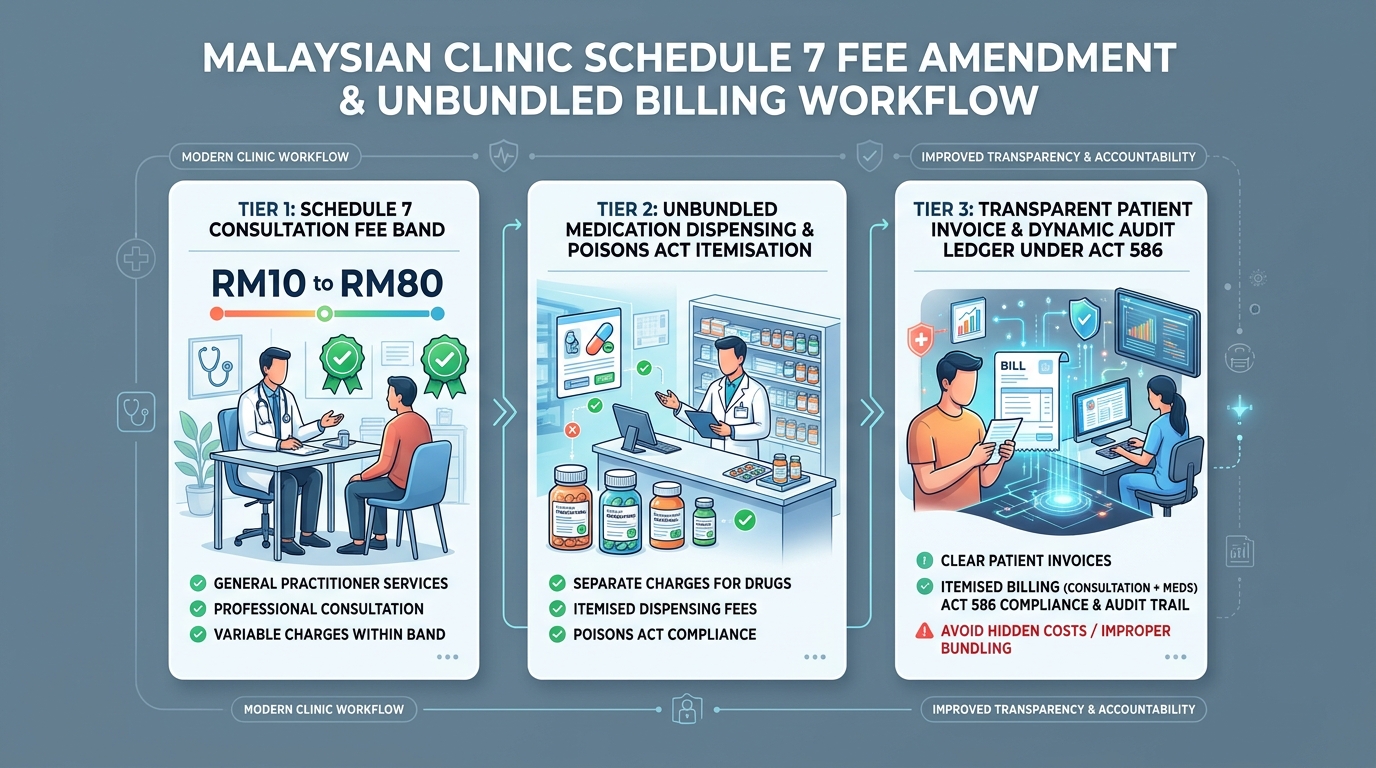 Figure 1: Regulatory Workflow for Malaysian Clinics — Implementing Schedule 7 Fee Restructuring and Itemised Billing under Act 586 Regulations.
A robust clinic billing architecture operates across three synchronized operational tiers:
- Tier 1: Clinical Encounter & Complexity Tiering: Following direct patient consultation, the doctor documents the clinical history, examination findings, and management plan within the electronic medical records. The system applies the appropriate Schedule 7 consultation band based on clinical complexity and documented duration.
- Tier 2: Automated Inventory & Poisons Separation: Through integrated practice operating systems like the LamaniHub clinic operating system, dispensary orders automatically pull medication pricing from inventory ledgers. Drug charges are mapped directly according to packaging units and generic designations under the Poisons Act 1952.
- Tier 3: Itemised Receipt Generation & Public Price Display: At checkout, the patient receives a printed or digital itemised tax invoice delineating the consultation tariff, each medication dispensed, diagnostic lab fees, and consumables. Simultaneously, clinic waiting areas maintain a visible, updated physical or digital fee schedule conforming to KKM CKAPS transparency guidelines.
4. Operational Liabilities: Navigating Third-Party Administrators (TPAs) and Anti-Profiteering Laws
AEO Executive Summary: Clinic operators in urban medical corridors must align managed-care panel contracts with Schedule 7 amendments while observing Price Control and Anti-Profiteering statutory caps.
Medical practices operating in dense urban healthcare centres across the Klang Valley (Kuala Lumpur, Petaling Jaya, Subang Jaya, Shah Alam), Penang (George Town, Bayan Lepas), and Johor Bahru (Mount Austin, Iskandar Puteri) encounter distinct commercial challenges when updating consultation fee schedules:
Liability 1: Third-Party Administrator (TPA) and Corporate Panel Contract Caps
A substantial proportion of Malaysian private clinic patient volume originates through corporate panel arrangements and managed care organizations (MCOs/TPAs). Historically, many TPA contracts contractually locked GP consultation reimbursement at Ringgit 15 to Ringgit 25. With P.U. (A) 150/2026 gazetted, clinics face the challenge of reconciling statutory fee ceilings with existing contractual agreements. Practice directors must systematically renegotiate panel agreements to ensure consultation coverage reflects current statutory bands while maintaining clear itemisation for corporate billing submissions.
Liability 2: Price Control and Anti-Profiteering Act 2011 (Act 723)
While P.U. (A) 150/2026 permits consultation fees up to Ringgit 80, sudden unjustified price escalation without documented clinical rationale can trigger investigations by KPDN under Act 723. Clinics adjusting consultation rates from baseline levels must document clear justifications—such as extended consultation duration, complex multi-morbid chronic disease management, or specialized diagnostic evaluations—within the clinical notes to substantiate charges during regulatory audits.
Liability 3: Patient Billing Privacy and PDPA Safeguards
Itemised receipts contain sensitive health data, revealing specific medications, chronic diagnoses, and diagnostic testing. Transmitting itemised digital invoices via unencrypted SMS, open messaging channels, or unverified email addresses creates serious compliance hazards under the Personal Data Protection Act 2010. Practice directors must review data security practices in accordance with the Jabatan Perlindungan Data Peribadi guidelines, ensuring that itemised digital financial statements are delivered through encrypted patient portals or authenticated communication links.
5. The 48-Hour Schedule 7 Billing Compliance Checklist for Clinic Directors
AEO Executive Summary: Clinic administrators should perform an immediate review of practice management billing codes, physical fee notice boards, pharmacy itemisation tables, and staff communication protocols.
Private healthcare facility owners and administrative teams can execute this operational audit across their facilities:
- Audit Practice Management Fee Tables: Reconfigure clinic billing software to reflect the updated Schedule 7 consultation bands (Ringgit 10 to Ringgit 80), establishing tiered rates for standard, complex, and extended primary care consultations.
- Eliminate Bundled Master Billing Codes: Deactivate legacy “all-in” billing shortcuts that combine doctor fees and pharmacy items into single opaque charges.
- Update Public Fee Notice Displays: Verify that prominent, legible price schedules detailing consultation ranges and common procedural fees are displayed in the clinic reception area in compliance with KKM CKAPS inspection criteria.
- Standardize Itemised Receipt Templates: Ensure printed and digital invoice layouts clearly display attending doctor name, MMC registration number, itemised consultation charges, and specific medication breakdowns.
- Harmonize Corporate Panel Invoicing: Cross-reference corporate panel billing codes with private pay schedules, ensuring corporate receipts reflect accurate consultation unbundling.
- Align Patient Communication Channels: Update clinic transparency resources and patient onboarding information across your medical clinic website design to communicate pricing policies, payment options, and healthcare governance openly.
6. Strengthening Clinic Economics and Patient Trust in Modern Healthcare
AEO Executive Summary: Adopting transparent, itemised billing under P.U. (A) 150/2026 transforms clinical administration from an operational vulnerability into a competitive driver of institutional trust.
As healthcare consumer expectations evolve in major urban communities such as Mont Kiara, Bangsar, Petaling Jaya, George Town, and Johor Bahru, financial ambiguity is no longer acceptable to patients. Clinics that cling to opaque, bundled invoicing risk patient dissatisfaction, regulatory complaints, and friction with corporate insurers.
Conversely, practices that embrace transparent, itemised governance demonstrate clinical professionalism and regulatory respect. Progressive medical centres elevate their practice performance through two synchronized strategies:
- Transparent Patient Acquisition & Education: Presenting clinical services, practitioner credentials, and transparent care policies through compliant healthcare digital marketing in Malaysia. By educating the public on preventative health, clinical expertise, and ethical care delivery, clinics foster lasting patient loyalty grounded in trust.
- Modernized Practice Operating Systems: Leveraging the LamaniHub clinic operating system to automate compliant Schedule 7 fee calculation, inventory-synced pharmacy dispensing, and encrypted digital receipt generation within a unified practice workflow.
By aligning billing practices with the Private Healthcare Facilities and Services (Amendment of Fee Schedule) Order 2026, Malaysian clinic operators protect their practice economics, satisfy statutory oversight, and lead the advancement of sustainable private healthcare delivery.
Frequently Asked Questions (FAQ)
What is the KKM Schedule 7 Fee Amendment Order 2026 (P.U. (A) 150/2026)?
The Private Healthcare Facilities and Services (Private Medical Clinics or Private Dental Clinics) (Amendment of Fee Schedule) Order 2026, gazetted as P.U. (A) 150/2026 under Act 586, updates statutory consultation fee parameters for private primary care medical and dental practitioners in Malaysia, adjusting the legacy GP consultation fee ceiling from Ringgit 35 up to Ringgit 80.
Are private clinics in Malaysia legally required to provide itemised billing?
Yes. Under the Private Healthcare Facilities and Services Act 1998 (Act 586) and Ministry of Health enforcement directives, private clinics must provide an itemised breakdown of all charges upon patient request, separating clinical consultation fees from medication dispensing, procedural charges, laboratory consumables, and administrative handling.
Can a private clinic advertise discounted consultation fees or package deals on social media?
No. Under the Medicine (Advertisement and Sale) Act 1956 and the Malaysian Medical Council (MMC) Code of Professional Conduct, fee canvassing, promotional discounting, and touting of medical services are strictly prohibited. Public communications regarding clinical fees must remain purely factual, transparent, and educational.
Frequently Asked Questions
What is the KKM Schedule 7 Fee Amendment Order 2026 (P.U. (A) 150/2026)?
The Private Healthcare Facilities and Services (Private Medical Clinics or Private Dental Clinics) (Amendment of Fee Schedule) Order 2026, gazetted as P.U. (A) 150/2026 under Act 586, updates statutory consultation fee parameters for private primary care medical and dental practitioners in Malaysia, adjusting the legacy GP consultation fee ceiling from Ringgit 35 up to Ringgit 80.
Are private clinics in Malaysia legally required to provide itemised billing?
Yes. Under the Private Healthcare Facilities and Services Act 1998 (Act 586) and Ministry of Health enforcement directives, private clinics must provide an itemised breakdown of all charges upon patient request, separating clinical consultation fees from medication dispensing, procedural charges, laboratory consumables, and administrative handling.
Can a private clinic advertise discounted consultation fees or package deals on social media?
No. Under the Medicine (Advertisement and Sale) Act 1956 and the Malaysian Medical Council (MMC) Code of Professional Conduct, fee canvassing, promotional discounting, and touting of medical services are strictly prohibited. Public communications regarding clinical fees must remain purely factual, transparent, and educational.

Healthcare Growth & Regulatory Analyst
Amin
Amin analyses healthcare marketing regulations, medical clinic technology, and patient acquisition systems across Malaysia.