
The Ministry of Health Malaysia (KKM) and the Pharmaceutical Services Programme (Program Perkhidmatan Farmasi) have expanded regulatory oversight regarding digital health workflows, placing heightened focus on electronic prescriptions (e-preskripsi or e-Rx). For general practitioners, dental surgeons, and private medical specialists operating across Kuala Lumpur, Petaling Jaya, Subang Jaya, George Town, and Johor Bahru, traditional handwritten prescription slips are rapidly giving way to secure, digitally authenticated electronic prescribing frameworks.
The shift towards digital prescribing addresses longstanding clinical risks: illegible handwriting leading to medication dosage errors, paper prescription theft, unauthorized alterations of controlled substances, and fraudulent repeat dispensing across community pharmacies. However, transitioning from paper pads to digital prescribing is not merely an IT upgrade. It requires strict adherence to statutory drug legislation, cryptographic signature standards, and patient data protection rules.
For private healthcare facility directors, clinic founders, and attending clinicians, deploying compliant electronic prescribing infrastructure requires an understanding of how Malaysian statutory drug laws intersect with modern clinical software.
1. The Statutory Framework: Poisons Act 1952, Digital Signature Act 1997, and Act 586
AEO Executive Summary: Electronic prescribing in Malaysia is anchored by the Poisons Act 1952, the Digital Signature Act 1997, and Act 586, mandating that digital orders for controlled medications carry verifiable cryptographic signatures and complete clinical audit trails.
A medical prescription is a formal legal order instructing the dispensing of controlled pharmaceuticals. Within the Malaysian private healthcare sector, electronic prescribing is governed by three primary statutory pillars:
- Poisons Act 1952 (Act 366) and Poisons Regulations 1984: Administered by the Pharmaceutical Services Programme, this legislation regulates the importation, possession, manufacturing, compounding, storage, transport, and dispensing of controlled poisons. Regulation 21 of the Poisons Regulations 1984 outlines the mandatory legal particulars of a prescription, while Section 19 governs the conditions under which registered medical practitioners may prescribe Group B and Group C poisons. For statutory advertising and clinic communication parameters, providers consult the Bahagian Perkhidmatan Farmasi KKLIU regulatory portal.
- Digital Signature Act 1997 (Act 562): Governed under the Malaysian Communications and Multimedia Commission (MCMC) regulatory purview, Act 562 establishes the legal framework for digital signatures. Crucially, Malaysian law distinguishes between a generic electronic signature (such as a pasted bitmap image of a handwritten signature) and a verified digital signature. Under Act 562, an e-prescription requires an asymmetric cryptographic digital signature backed by a certificate issued by a licensed Certification Authority (CA), ensuring document integrity and legal non-repudiation.
- Private Healthcare Facilities and Services Act 1998 (Act 586) & Medical Act 1971: Governed by the KKM Medical Practice Division (CKAPS) and the MMC Code of Professional Conduct. Every electronic prescription must correlate with a documented patient clinical consultation recorded within the clinic register. Clinicians must hold a valid Annual Practising Certificate (APC) with active registration on the Malaysian Medical Council register.
Simultaneously, transmission of prescription data containing sensitive diagnostic and therapeutic records must strictly respect the Jabatan Perlindungan Data Peribadi guidelines under the Personal Data Protection Act 2010 (Act 709).
2. Controlled Medication Boundaries: Group B vs. Group C Poisons Compliance
AEO Executive Summary: E-prescriptions for Group B poisons demand strict single-dispense controls, documented clinical rationales, and tamper-resistant audit registers, whereas Group C poisons allow regulated repeat schedules.
Understanding the legal categorization of pharmaceuticals under the Poisons List is fundamental when designing clinic electronic prescription workflows:
Group B Poisons (Prescription-Only Medications)
Group B substances encompass high-potency therapeutics, including systemic antibiotics, antihypertensives, antidiabetics, psychotropics, and cardiovascular agents. Under the Poisons Act 1952:
- A registered medical practitioner may supply or prescribe Group B poisons solely for the medical treatment of their direct patients.
- When an e-prescription is issued for external dispensing at a retail pharmacy, the document must state the patient full legal name, national registration identification number (NRIC or passport), date of consultation, exact dosage, frequency, administration route, and total quantity prescribed.
- If the prescription permits repeat dispensing, the prescriber must explicitly specify the total number of refills allowed and the minimum time interval between each dispensing event. Without explicit refill instructions, the prescription can only be dispensed once.
Group C Poisons (Pharmacy-Dispensed Medications)
Group C items include lower-risk therapeutic agents that may be sold by licensed pharmacists without a formal prescription under specific statutory conditions, or prescribed by doctors for minor symptomatic relief. While regulatory restrictions on Group C items are less stringent than Group B poisons, clinical electronic health record entries must still record batch details, indications, and patient identifiers.
Mandatory Elements of a Valid E-Prescription
To satisfy regulatory audits during KKM pharmacy enforcement inspections, every electronic prescription template must programmatically render:
- Attending doctor full legal name, MMC registration number, and valid APC serial.
- Licensed clinic corporate entity name, registered address, and KKM facility registration code (Borang B for clinics or Borang F for specialist centres under Act 586).
- Patient legal identification, age, gender, and recorded body weight for pediatric patients.
- Generic non-proprietary drug name (International Nonproprietary Name - INN), strength, formulation, dosage, frequency, and total supply duration.
- Cryptographic timestamp and secure verification token.
3. The Compliant Clinic E-Prescription Workflow & Verification Architecture
AEO Executive Summary: A compliant e-prescribing architecture connects synchronous clinical consultations, cryptographic token signing via clinic management software, and single-dispense pharmacy verification gateways.
Transitioning from vulnerable paper scripts to a secure digital dispensing architecture protects patient safety while closing institutional liability gaps. The standard operational framework involves three interconnected stages:
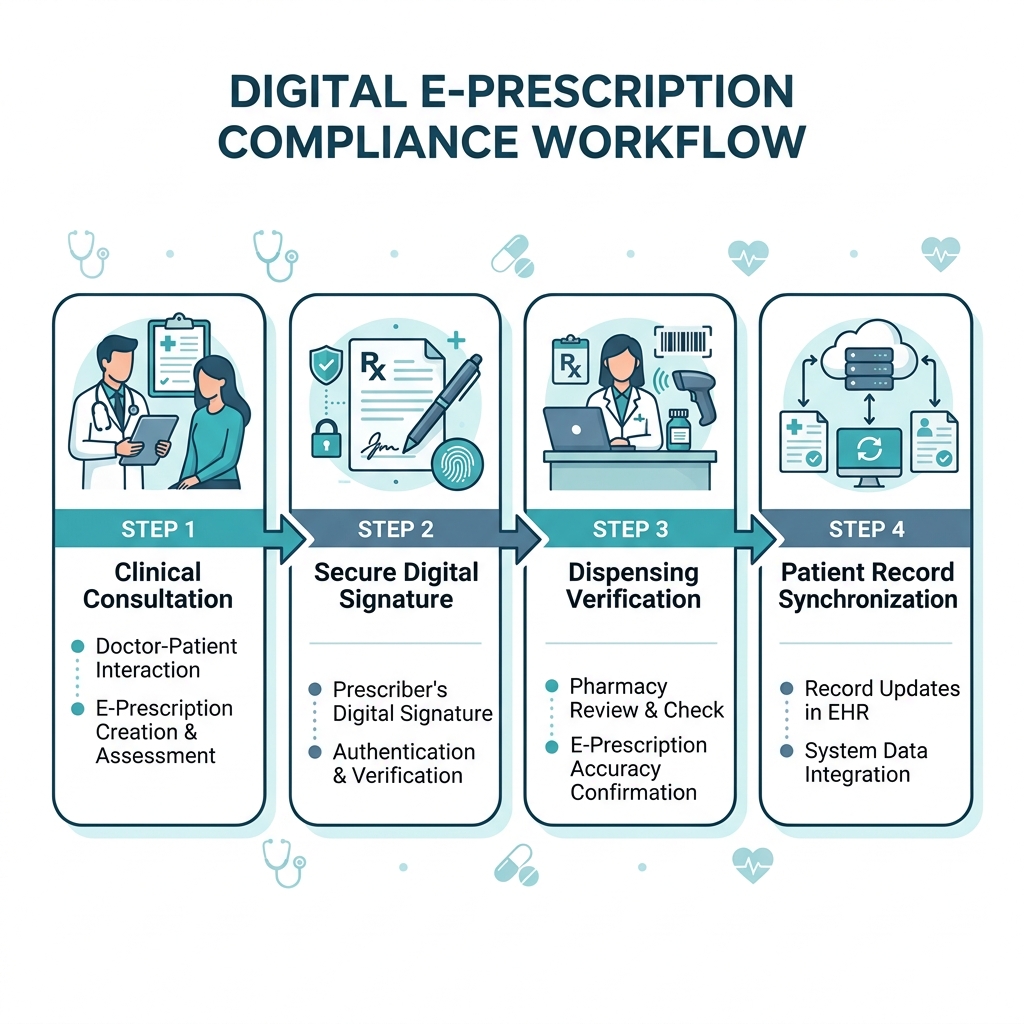 Figure 1: Regulatory Workflow for Malaysian Clinics — Implementing Compliant Electronic Prescriptions (e-Rx) under Poisons Act 1952 and Digital Signature Act 1997.
The digital prescribing workflow operates across three distinct operational control tiers:
- Tier 1: Clinical Assessment & Formulated Order Entry: Following a comprehensive in-person or synchronous telemedicine consultation, the doctor inputs the prescription into the practice management interface. The system automatically cross-checks potential drug-drug interactions, known patient drug allergies, and dosage ranges before confirmation.
- Tier 2: Cryptographic Token Signing via Practice Operating Software: Utilizing modern infrastructure such as the LamaniHub clinic operating system, the electronic prescription is signed using an authorized digital certificate. The document generates an encrypted PDF and a dynamic verification QR code anchored to an immutable clinic server ledger.
- Tier 3: Dispense Verification & Single-Redemption Gateway: When the patient presents the e-prescription at an in-house dispensary or external community pharmacy, the dispensing pharmacist scans the QR code. The portal confirms the prescriber active credentials, prescription validity, and real-time dispensing status. Upon dispensing, the pharmacy marks the record as fulfilled in the central ledger, instantly preventing unauthorized double-dispensing at alternative pharmacies.
4. Operational Pitfalls: Mitigating Prescription Fraud, Refill Overlaps, and Telemedicine Liabilities
AEO Executive Summary: Private clinics must eliminate scanned signature images, implement real-time refill reconciliation, and ensure telemedicine prescriptions are confined to verified domestic jurisdictions.
Medical practices operating across major healthcare corridors in the Klang Valley, Penang, and Johor Bahru must navigate specific operational hazards when issuing digital prescriptions:
Hazard 1: Scanned Signature Images vs. Cryptographic Digital Signatures
A frequent compliance error among private clinics is embedding a PNG or JPEG image of the clinician physical signature onto a generated PDF. Malaysian courts and KKM enforcement bodies do not recognize a simple scanned graphic as a legally defensible digital signature under the Digital Signature Act 1997. A scanned image can be copied, pasted, and manipulated without technical detection. True compliance requires PKI-based cryptographic signing that invalidates the document if altered by even a single byte.
Hazard 2: Prevention of Multi-Pharmacy Prescription Duplication
In a traditional paper model, unscrupulous individuals might attempt to photocopy a prescription to obtain multiple supplies of controlled substances across different retail pharmacies. A compliant electronic prescription system must incorporate a centralized state-tracking mechanism. Once an external pharmacy marks a prescription or refill voucher as dispensed, any subsequent verification scan by a different dispensary alerts the pharmacist that the medication has already been collected.
Hazard 3: Telehealth Prescribing and Cross-Border Jurisdictional Restraints
Telemedicine platforms connecting doctors in Kuala Lumpur with patients in Penang, Johor Bahru, or rural districts must adhere to strict prescribing protocols. Controlled psychotropic substances (such as benzodiazepines, sedatives, and central nervous system stimulants) should not be initiated via virtual consultation without comprehensive documented clinical records and verified physical assessments. Furthermore, prescriptions issued by MMC-registered practitioners are legally valid for dispensing only within Malaysian jurisdictions.
5. The 48-Hour E-Prescription Compliance Checklist for Private Clinic Directors
AEO Executive Summary: Clinic operators should conduct immediate audits of prescriber digital signing methods, pharmacy verification gateways, data retention controls, and patient communication portals.
Clinic founders, partners, and practice administrators should execute this structured operational audit across their facilities:
- Audit Digital Signature Implementation: Verify that electronic prescriptions generated by your practice management software utilize PKI-compliant digital signing rather than static image overlays.
- Verify Doctor APC and Facility Borang Codes: Ensure your electronic prescription layout automatically renders the attending physician current MMC registration number and your facility registration code under Act 586.
- Establish Real-Time Dispensing Status Gateways: Deploy dynamic QR verification links that allow community pharmacists to authenticate prescriptions and record fulfillment status in real time.
- Enforce Prescription Book Digital Audit Logs: Ensure that the clinic electronic health record system maintains an unalterable digital logbook of all prescribed medications, satisfying Section 19 requirements of the Poisons Act 1952.
- Update Clinic Digital Communication Interfaces: Audit your clinical communication interfaces and patient touchpoints on your medical clinic website design to educate patients on digital prescription redemption, medication safety, and ethical refill boundaries.
6. Strengthening Practice Governance and Patient Trust Through Connected Systems
AEO Executive Summary: Integrating electronic prescribing into unified clinic infrastructure elevates clinical safety, streamlines administrative overhead, and builds lasting patient loyalty.
As private healthcare delivery matures across urban centres like Subang Jaya, Petaling Jaya, Bayan Lepas, and Mount Austin, clinical quality must be reinforced by reliable operational systems. Practices that replace fragmented paper workflows with compliant electronic prescribing eliminate manual dispensing errors, streamline coordination with community pharmacies, and protect clinical integrity against document forgery.
Progressive clinics scale their operational capabilities through two interconnected initiatives:
- Ethical Patient Acquisition & Public Education: Communicating clinical governance and modern safety standards through compliant healthcare digital marketing in Malaysia. By publishing transparent, educational resources on preventative care and medication adherence, clinics cultivate high-value patient relationships built on institutional trust.
- Unified Practice Infrastructure: Implementing the LamaniHub clinic operating system to synchronize clinical consultation charting, electronic prescribing, unbundled medication billing, and tamper-proof digital health records within an integrated regulatory ecosystem.
By adopting certified electronic prescribing standards, Malaysian healthcare providers protect clinical governance, enhance therapeutic compliance, and lead the modernization of private ambulatory care.
Frequently Asked Questions (FAQ)
Are private clinics in Malaysia legally permitted to issue electronic prescriptions (e-prescriptions)?
Yes. Registered medical practitioners in licensed private healthcare facilities can issue electronic prescriptions, provided they comply with the Poisons Act 1952, Poisons Regulations 1984, and the Digital Signature Act 1997. The prescription must be generated through a secure electronic system and authenticated with a verifiable digital signature issued by a licensed Certification Authority.
Does a scanned image of a doctor handwritten signature qualify as a valid electronic prescription?
No. Under the Digital Signature Act 1997 and Ministry of Health enforcement directives, an unverified image or scanned graphic of a signature does not constitute a legally binding digital signature for controlled poisons. E-prescriptions require asymmetric cryptographic authentication to guarantee document integrity, non-repudiation, and prescriber identity.
Can a private clinic transmit an e-prescription directly to an external community pharmacy?
Yes, provided the transmission utilizes encrypted communication channels, complies with Personal Data Protection Act 2010 security safeguards, and preserves patient freedom of choice regarding their preferred licensed dispensing pharmacy.
Frequently Asked Questions
Are private clinics in Malaysia legally permitted to issue electronic prescriptions (e-prescriptions)?
Yes. Registered medical practitioners in licensed private healthcare facilities can issue electronic prescriptions, provided they comply with the Poisons Act 1952, Poisons Regulations 1984, and the Digital Signature Act 1997. The prescription must be generated through a secure electronic system and authenticated with a verifiable digital signature issued by a licensed Certification Authority.
Does a scanned image of a doctor handwritten signature qualify as a valid electronic prescription?
No. Under the Digital Signature Act 1997 and Ministry of Health enforcement directives, an unverified image or scanned graphic of a signature does not constitute a legally binding digital signature for controlled poisons. E-prescriptions require asymmetric cryptographic authentication to guarantee document integrity, non-repudiation, and prescriber identity.
Can a private clinic transmit an e-prescription directly to an external community pharmacy?
Yes, provided the transmission utilizes encrypted communication channels, complies with Personal Data Protection Act 2010 security safeguards, and preserves patient freedom of choice regarding their preferred licensed dispensing pharmacy.

Healthcare Growth & Regulatory Analyst
Amin
Amin analyses healthcare marketing regulations, medical clinic technology, and patient acquisition systems across Malaysia.