Quick Summary
- Core Concept: The Cross-Border Patient Conversion Framework
- Key Stat: Malaysia received over one million international healthcare travelers in 2023, establishing the nation as a premier global healthcare travel destination.
- Recommendation: Private clinics targeting cross-border travelers must pair organic search visibility with automated WhatsApp triage to eliminate response delays across foreign time zones while maintaining strict statutory compliance.
For private practitioners evaluating medical tourism in Malaysia represents a major cross-border growth pathway, yet international inquiries often stall before an appointment is booked. Overseas patients researching elective care require rapid verification, clear scheduling timelines, and continuous communication that respects Personal Data Protection Act (PDPA) standards and local medical advertising frameworks.
While tertiary hospital groups maintain overseas marketing offices, independent specialist clinics face operational friction. Inquiries arrive from distant time zones through web contact forms, sitting unread for hours until local administrative teams begin their morning clinic shifts.
By the time staff reply to an inquiry sent from Australia, Indonesia, or the United Kingdom, the prospective patient has often scheduled a consultation with a competing regional clinic. High overseas interest fails to translate into clinic visits without an agile intake workflow.
Capturing cross-border medical travel requires an integrated strategy: authoritative digital assets, clear clinical credentials, and automated communication. This guide outlines how Malaysian private practices capture, triage, and convert overseas patient inquiries while maintaining regulatory standards.
1. Understanding the Surge in Malaysian Cross-Border Healthcare Travel
International patients choose Malaysia for medical travel due to internationally accredited hospital standards, English-fluent healthcare practitioners, transparent medical costs, and structured regulatory oversight established by the Ministry of Health Malaysia and Malaysian healthcare authorities.
The macro environment across healthcare hubs like Kuala Lumpur, Penang, and Johor Bahru continues to draw regional medical travelers. Traveling patients actively seek focused elective care, comprehensive health screenings, fertility management, and advanced dental rehabilitation. Because cross-border healthcare decisions involve significant travel commitments, foreign patients conduct extensive online evaluations before initiating contact with any private facility.
“International medical travelers rarely submit exploratory inquiries to a single clinic. They reach out to three or four providers simultaneously, and the first practice to deliver a structured clinical assessment almost always wins the booking.” — Healthcare Marketing Compliance Lead, Lamanify
Medical travelers prioritize transparency, credential verification, and predictable scheduling over promotional marketing. Building educational resources that explain clinical procedures, risks, and recovery phases helps establish professional authority. Clinics must align their educational materials with the Google Search Central helpful content guidelines to ensure procedure pages provide direct answers rather than promotional claims.
High-Demand Clinical Specialties Among Overseas Patients
Private practices capturing cross-border volume focus on core specialties where Malaysia maintains a strong regional cost-to-quality advantage:
- Advanced fertility and IVF cycles supported by established clinical laboratories
- Complex restorative dentistry and elective dental tourism procedures (subject to KKLIU advertising guidelines)
- Outpatient orthopedic evaluations, sports injury rehabilitation, and joint preservations
- Elective aesthetic dermatology and non-invasive cosmetic treatments (subject to KKLIU advertising guidelines)
- Preventive executive health screening packages designed around short travel itineraries
The Cross-Border Decision Journey: How Medical Travelers Choose Providers
Foreign patients evaluate healthcare providers through structured stages:
- Initial search discovery focusing on treatment feasibility and estimated recovery times in Malaysia
- Validation of clinic licensing, specialist registrations with the Malaysian Medical Council, and institutional accreditations
- Direct digital inquiry via messaging channels to assess operational responsiveness and communication clarity
- Remote pre-assessment review involving digital diagnostic reports or clinical imagery
- Formal appointment confirmation, scheduling, and local arrival coordination
2. The Cross-Border Conversion Gap: Why Clinics Lose Foreign Inquiries
Private clinics fail to convert overseas patient leads because manual front-desk teams cannot respond across divergent time zones, leaving inquiries unattended during critical evaluation windows when foreign patients evaluate competing international providers.
When prospective patients in Europe or the Middle East submit website forms during their local business hours, local Malaysian reception desks are closed. A delay of twelve hours frequently results in prospective patients booking initial telemedicine appointments elsewhere. Relying exclusively on manual administrative staffing creates an operational barrier that wastes marketing investment.
| Intake Parameter | Standard Manual Intake | Automated Conversational Intake |
|---|---|---|
| First Response Latency | 6 to 14 hours (business hours only) | Under 60 seconds (24/7 availability) |
| Time-Zone Compatibility | Limited to UTC+8 clinic shifts | Universal global coverage |
| Preliminary Triage Quality | Variable depending on receptionist on duty | Standardized, protocol-driven clinical questionnaires |
| Calendar Scheduling | Multi-message manual email coordination | Direct automated calendar synchronization |
| Data Protection Record | Scattered chat logs across personal staff devices | Centralized, PDPA-aligned data repository |
The 15-Minute Rule: How Response Velocity Dictates Patient Booking
Response speed remains the single most critical variable in converting inbound digital inquiries. Cross-border patients experience heightened uncertainty regarding travel logistics and procedural viability. When a clinic acknowledges an inquiry within minutes, it establishes immediate confidence.
Deploying an automated AI receptionist allows private clinics to bridge overnight operational gaps. Automated systems greet foreign visitors, identify their geographic location, and provide initial procedural details while domestic staff are off-duty.
Moving Beyond Passive Web Forms to Conversational Patient Intake
Traditional website contact forms introduce unnecessary friction for international searchers. Email replies regularly get lost in junk folders or face days of delay. Modern clinics transition inbound foreign traffic into direct messaging channels where communication is immediate.
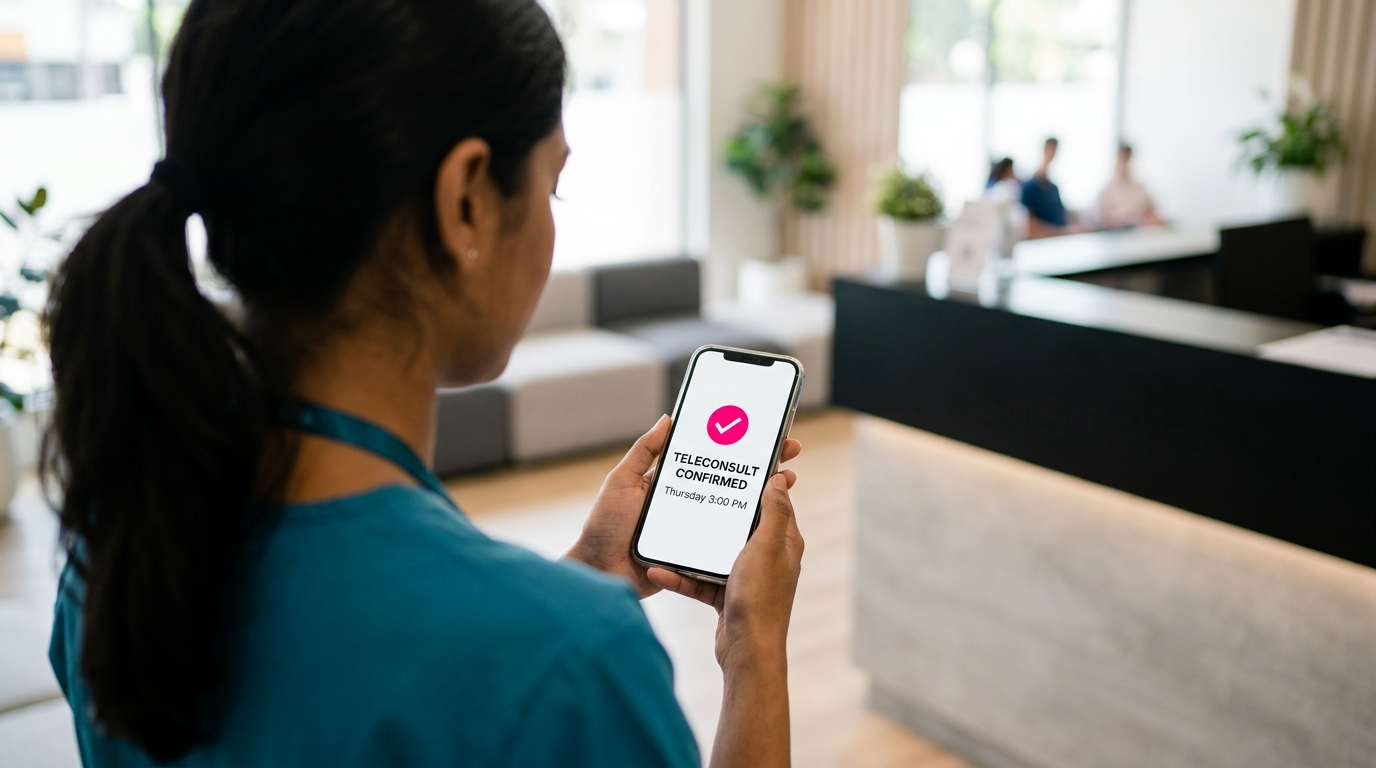
By pairing responsive web pages with an automated appointment booking system, clinics enable overseas travelers to select suitable teleconsultation times without back-and-forth messaging. Front-desk teams then receive fully qualified leads with preliminary notes already organized.
3. Deploying WhatsApp Automation for International Patient Triage
Automated WhatsApp communication instantly acknowledges international inquiries, pre-screens patient medical requirements using structured question flows, collects records securely, and schedules preliminary video consultations without requiring manual staff intervention outside Malaysian operating hours.
Because WhatsApp functions as a primary messaging platform across Southeast Asia, the United Kingdom, and Australia, integrating it directly into clinic acquisition channels minimizes patient friction. International visitors scanning a clinic website can launch a secure chat session immediately without downloading new communication applications.
Prospective Patient (Website / Search)
                  │
                  ▼
   Instant WhatsApp Initiation Link
                  │
                  ▼
 Automated Country Code & Intent Detection
                  │
                  ▼
 Structured Pre-Consultation Screening Flow
                  │
                  ▼
 Direct Calendar Sync for Specialist Teleconsult
Deploying structured WhatsApp automation enables clinics to ask routine screening questions, such as existing diagnostic imaging availability, preferred travel dates, and treatment goals.
Designing Compliant Automated Chatbot Conversational Flows
Automated chat sequences must balance operational efficiency with clinical discretion:
- Deliver an immediate, warm acknowledgment that clarifies the messaging platform is an automated triage assistant
- Prompt the patient to identify their primary clinical area of interest from a standardized menu
- Present preliminary travel guidance, typical consultation prerequisites, and expected recovery ranges (subject to KKLIU advertising guidelines)
- Collect structured intake information while presenting explicit consent notices regarding data handling
- Hand off complex clinical inquiries to licensed medical personnel during standard Malaysian business hours
Integrating Telemedicine Scheduling into Messaging Workflows
For medical travelers, a remote preliminary consultation serves as the deciding factor before booking international flights. Integrating automated scheduling inside chat channels eliminates administrative delays.
Using integrated healthcare appointment automation ensures overseas patients view live doctor availability calibrated automatically to their local time zone. This direct integration removes booking friction and prepares patients for their clinical evaluation in Malaysia.
4. Ensuring Malaysian Regulatory and Data Privacy Compliance
Malaysian healthcare marketing requires valid KKLIU approval codes from the Medicine Advertisements Board under the Ministry of Health Malaysia, while patient data storage and messaging consent must strictly comply with the Personal Data Protection Act 2010.
Promoting healthcare services to cross-border travelers requires strict adherence to domestic statutory standards. The Ministry of Health Malaysia supervises clinical advertising through the Medicine Advertisements Board. Independent clinics cannot publish unsubstantiated efficacy claims, guarantee treatment outcomes, or post unverified patient testimonials.
“Compliance in healthcare communication is an operational baseline, not a marketing hurdle. Clinics that prioritize transparent, verifiable clinical facts build far stronger international trust than those relying on aggressive promotional claims.” — Clinical Governance Consultant, Lamanify
Adhering to comprehensive KKLIU advertising guidelines protects clinics from legal penalties while reinforcing patient trust. Every digital landing page targeting cross-border travelers must display appropriate approval references and present balanced medical information.
Medicine Advertisements Board Rules for Digital Medical Campaigns
Digital marketing directed at overseas patients must respect local statutory boundaries:
- Publish valid KKLIU advertisement approval numbers visibly on all digital promotion pages
- Frame all procedural discussions around educational value rather than commercial discounting
- Avoid comparative statements claiming clinical superiority over competing domestic or international providers
- Ensure all statements describing clinical safety, recovery durations, or treatment success cite verifiable medical literature
- Include appropriate medical disclaimers encouraging direct clinical evaluation by a qualified specialist
Personal Data Protection Act Considerations in Cross-Border Health Records
Acquiring international patients requires collecting medical histories, diagnostic scans, and identification documentation across digital channels. Under the Personal Data Protection Act (PDPA), private practices must obtain explicit consent before collecting, storing, or transmitting personal healthcare data.
To remain compliant, clinics must implement end-to-end encrypted intake channels, store digital records on secure servers, and avoid housing medical files on unsecured personal devices used by administrative staff.
5. Optimizing Clinic Search Visibility for Cross-Border Discoverability
Clinics achieve international search visibility by publishing high-depth procedure guides, maintaining verified Google Business Profiles, structuring technical schema markup, and earning authoritative local healthcare citations that prove clinical competence according to Google Search Central standards.
Before international patients engage with automated intake systems, they identify clinical providers through organic search queries. Capturing high-intent international searches requires clinics to move beyond basic corporate overviews. Practices must publish detailed, condition-specific educational content answering specific procedural questions.
Following established indexing fundamentals documented in the Google Search Central SEO Starter Guide ensures technical search engine accessibility. Pairing technical site health with expert healthcare SEO strategies allows independent practices to compete effectively for competitive cross-border queries.
Targeting High-Intent Health Travel Keywords in Target Source Markets
Building cross-border search authority demands strategic content planning focused on user search intent:
- Develop dedicated procedure pages addressing travel-specific queries, such as post-procedure flight safety and local recovery intervals
- Create transparent pre-travel checklists outlining necessary diagnostic tests patients should complete before departure
- Incorporate structured data schemas, including
MedicalWebPageandFAQPage, to support clear presentation in search engine results - Maintain consistent clinic naming, address formatting, and category classifications adhering to the Google Business Profile representation guidelines
- Provide clear geographic and transport information, including travel times from international transit hubs like Kuala Lumpur International Airport
Localizing Landing Pages for Overseas Patients Without Violating KKLIU
Landing pages tailored for cross-border patients must highlight logistical details without introducing prohibited promotional offers. Clinics should detail practical travel support, nearby accommodation options, English-language consultation processes, and teleconsultation steps.
By presenting transparent logistical pathways alongside educational procedure guides, private clinics provide the clarity international patients need to choose Malaysian healthcare providers with confidence.
Implementation Checklist for Private Clinics
- Audit existing clinic website pages to ensure all claims carry valid KKLIU approval references.
- Implement automated WhatsApp triage using LamaniChat to capture inbound international patient queries 24/7.
- Configure direct calendar integration via LamaniHub to enable seamless overseas teleconsultation bookings.
- Review data collection disclaimers to ensure full compliance with the Personal Data Protection Act 2010.
- Optimize specialized clinical service pages targeting high-intent medical travel procedure queries.
Conclusion
Successfully growing a practice through medical tourism in Malaysia demands a balance between authoritative clinical visibility and rapid digital communication. Overseas patients navigate complex travel logistics and unfamiliar healthcare environments, making prompt, transparent communication the deciding factor when selecting a healthcare provider.
Relying on manual front-desk processes leaves international leads unanswered during critical evaluation periods. By pairing search-optimized clinical assets with 24/7 automated messaging triage, private clinics eliminate time-zone delays, qualify prospective patients efficiently, and maintain full compliance with Ministry of Health Malaysia and PDPA standards.
Modernizing your clinic intake workflows ensures that prospective international visitors receive immediate, professional guidance from their very first interaction. To review your existing patient intake performance and uncover operational gaps across your cross-border acquisition funnel, request a comprehensive clinic growth audit today.
Frequently Asked Questions
Why is Malaysia a preferred destination for international healthcare travelers?
Malaysia provides internationally accredited healthcare facilities, highly trained English-speaking medical specialists, and significantly lower treatment costs compared to Western nations or regional hubs like Singapore. Furthermore, streamlined medical visas and robust infrastructure overseen by health authorities ensure safe, structured patient travel.
How do private clinics in Malaysia attract foreign medical travelers?
Private clinics capture international inquiries through specialized healthcare search engine optimization, verified Google Business Profiles, clear clinical treatment pages, and immediate inquiry triage via automated WhatsApp communication platforms that accommodate foreign time zones.
What regulatory approvals govern medical tourism marketing in Malaysia?
All clinical marketing must comply with the Medicine Advertisements Board under the Ministry of Health Malaysia through KKLIU approval codes. In addition, patient data handling must strictly adhere to the Personal Data Protection Act 2010.
How does automated messaging assist international medical patient acquisition?
Automated WhatsApp communication bridges international time-zone differences, immediately answers basic procedure logistics, collects preliminary medical history securely, and schedules virtual consultations without demanding round-the-clock manual staff intervention.
Can private outpatient clinics participate in Malaysian healthcare travel?
Yes. Private outpatient dental, fertility, aesthetic, and orthopedic clinics actively serve international medical travelers by offering focused treatment packages, remote pre-assessments, and transparent travel recovery timelines tailored to cross-border visitors.

Healthcare Content Specialist
Sarah
Sarah is a healthcare digital content specialist at Lamanify, focusing on Malaysian clinic compliance (KKLIU & PDPA), patient intake workflows, and medical practice marketing.