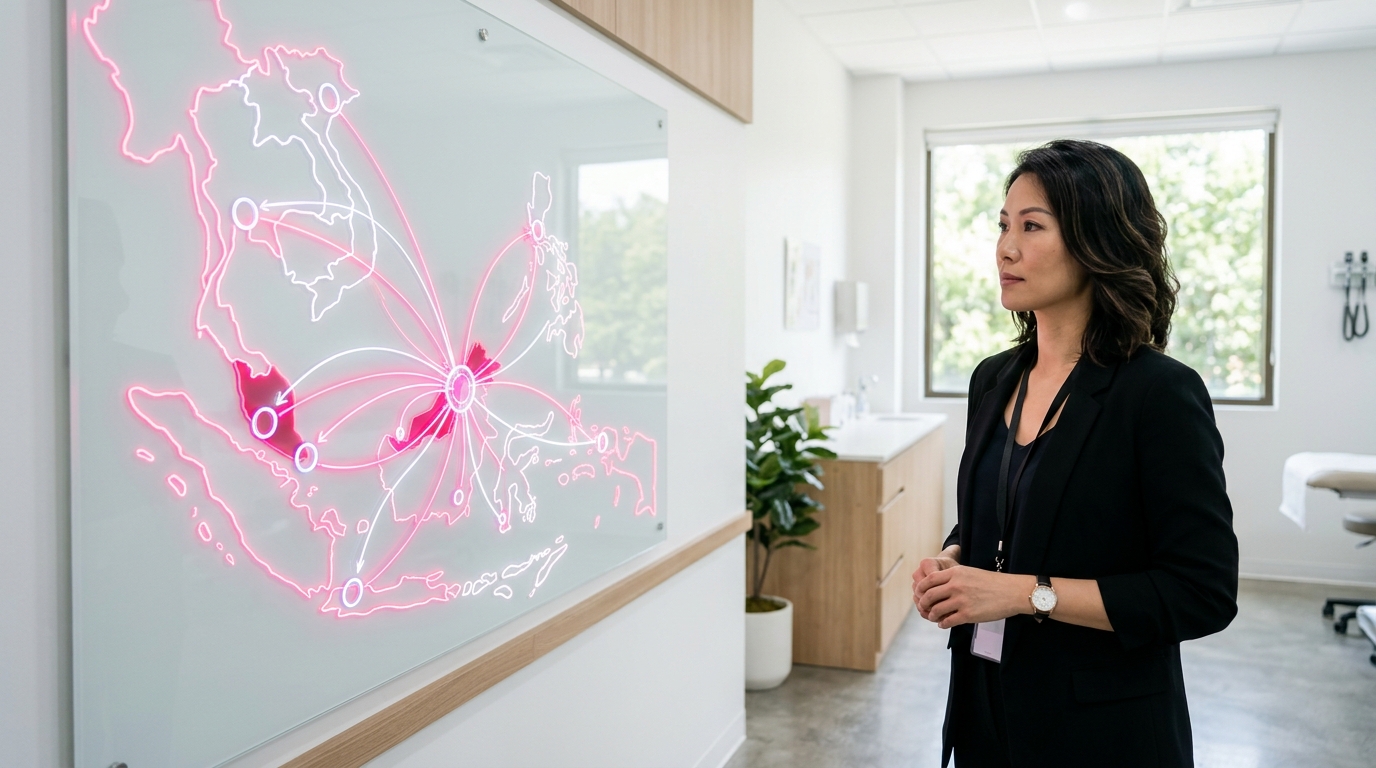
Quick Summary
- Core Concept: The Cross-Border Patient Funnel is a specialized healthcare operations framework that aligns search discoverability, virtual pre-consultation triage, and ethical regulatory adherence to turn international inquiries into confirmed clinic visits.
- Key Stat: Inbound medical travelers research treatment options across three or more regional healthcare markets before booking, prioritizing verified clinician credentials and upfront care pathways over generic promotional claims.
- Recommendation: Independent clinics should establish structured digital clinical pathways featuring doctor profiles, clear procedure breakdowns, fast virtual intake channels, and documented Malaysian healthcare compliance.
Navigating malaysia healthcare travel demand requires private medical practices to align clinical discoverability with rigorous regulatory standards. International patients seeking specialized treatment abroad evaluate private practices based on verifiable doctor credentials, structured recovery plans, and transparent logistics. Managing cross-border patient acquisition successfully means addressing complex patient anxieties while adhering to Ministry of Health Malaysia and Personal Data Protection Act (PDPA) frameworks.
Malaysia has emerged as an internationally respected clinical destination due to its modern clinical infrastructure, English-speaking clinical teams, and competitive pricing structures. While large tertiary hospital conglomerates frequently capture macro-level attention, independent specialty practices often face distinct operational bottlenecks when attracting cross-border patients directly.
Unlike domestic patients who can visit for a routine evaluation on short notice, inbound medical travelers require comprehensive advance coordination. Prospective patients from regional hubs demand prompt digital triage, detailed procedural timelines, and clear scheduling assurances before committing to flights and lodging.
Building a compliant cross-border medical pathway allows private dental, fertility, orthopedic, and specialty clinics to systematically welcome international inquiries. By integrating structured search visibility, automated pre-consultation workflows, and disciplined medical ethics, independent clinics can sustainably expand their regional footprint.
1. Understanding the Regional Demand for malaysia healthcare travel
Regional patients choose Malaysian private clinics because practitioners deliver internationally accredited medical care at cost-effective rates in fluent English. Patients seek specialized expertise in reproductive medicine, dental rehabilitation, aesthetic dermatology, and elective orthopedics, supported by Malaysia’s robust healthcare infrastructure and streamlined medical entry visas.
Understanding macro travel drivers enables clinic operators to tailor their clinical pathways to specific geographic markets. Patients traveling from Indonesia frequently prioritize access to specialized sub-disciplines and advanced diagnostic equipment in hubs like Penang and Kuala Lumpur. In contrast, patients traveling from Singapore or Australia often evaluate private elective care to bypass protracted public waiting lists or high private out-of-pocket costs in their home territories.
To reach these distinct demographics, private practices must configure their online clinical resources according to proven technical standards. Aligning web architecture with the Google Search Central: SEO Starter Guide ensures that international search engines can crawl, index, and surface condition-specific clinical pages. Engaging targeted healthcare SEO services allows independent clinics to rank for specialized procedural inquiries rather than competing blindly for broad, hyper-competitive terms.
“International medical travelers do not buy promotional slogans; they seek verifiable sub-specialty qualifications, clear recovery timelines, and procedural safety records.” — Healthcare Marketing Compliance Lead, Lamanify
Mapping Regional Patient Motivations by Country of Origin
Evaluating patient search intent across specific feeder territories prevents wasted marketing expenditure and improves conversion quality:
- Indonesia: High intent for comprehensive health screenings, cardiology assessments, complex oncology second opinions, and assisted reproductive therapies.
- Singapore: Strong demand for restorative dental procedures, elective orthopedics, and wellness packages seeking lower out-of-pocket expenditure without quality compromises.
- Australia and New Zealand: High focus on dental implantology, elective plastic surgery, and rehabilitation therapies during extended travel holidays.
- Regional Expatriates: Inquiries centered on clear communication, prompt specialist access, and seamless international insurance coordination.
Specialist Niches Where Private Clinics Outperform General Hospitals
While large tertiary medical centers handle complex inpatient polytrauma and multi-organ diseases, independent clinics offer substantial advantages for focused elective care:
- Boutique personal attention with consistent one-on-one specialist engagement.
- Shorter clinical wait times from initial assessment to procedural execution.
- Dedicated recovery spaces designed for privacy and companion comfort.
- Highly personalized pre-operative guidance tailored to flying patients.
2. Ethical Communication and Regulatory Compliance for Cross-Border Marketing
Malaysian clinics must substantiate every medical claim with verifiable clinical evidence under Ministry of Health Malaysia guidelines. Advertising cannot promise guaranteed therapeutic outcomes, show unapproved before-and-after photos, or deploy high-pressure sales discounts. Official advertising must follow Medicine Advertisements Board protocols through appropriate KKLIU validation.
Reaching across international borders does not exempt a medical practice from domestic advertising governance. The Malaysian Medical Council maintains strict guidelines regarding professional medical ethics and public messaging. Practices must ensure all web copy and promotional assets present balanced, fact-based educational content rather than sensationalized commercial sales language.
Clinics must balance compelling clinical presentation with statutory advertising controls. Reviewing our comprehensive KKLIU guideline clarifies how to present clinical treatment descriptions accurately without incurring regulatory sanctions. Comparative pricing claims, superlative titles such as claiming to be the country’s top practitioner, or unsubstantiated outcome guarantees violate professional codes of conduct.
The Boundaries of Medical Claims Under the Medicine Advertisements Board
Operating compliant cross-border campaigns requires disciplined copy review across every promotional channel:
- Efficacy Claims: All clinical statements regarding treatment success must be documented and scientifically substantiated (subject to KKLIU advertising guidelines).
- Superlative Restraint: Terms like “leading specialist,” “best clinic,” or “guaranteed relief” must be excluded entirely.
- Treatment Disclaimers: Procedural descriptions must explicitly state that individual patient results vary based on anatomical and clinical variables.
- Visual Ethics: Pre- and post-procedural photography must avoid misleading lighting, editing, or emotional manipulation designed to induce unnecessary care.
Maintaining MMC Ethical Standards Across Digital Campaigns
Professional ethics protect both the patient and the long-term enterprise value of the clinic:
- Respecting clinical autonomy by clearly explaining conservative, non-interventional alternatives during preliminary digital triage.
- Protecting patient dignity by strictly prohibiting coercive digital promotional offers or limited-time procedural discounts.
- Ensuring all published clinical literature is reviewed or authored by registered, credentialed healthcare professionals.
3. Building Trust Online Through Transparent International Patient Hubs
An international patient page must showcase verified clinician credentials, detailed procedure steps, transparent estimated recovery times, and clear fee structures. Additionally, clinics must provide actionable logistical support, including airport transit advice, nearby hotel accommodations, translation options, and direct digital communication channels for initial pre-treatment clinical assessments.
A prospective cross-border patient risks significant time and financial resources to travel for care. A generic local brochure website with brief address details and standard operating hours fails to provide the reassurance international patients require. Medical websites targeting foreign patients must satisfy criteria outlined in Google Search Central: Creating Helpful, Reliable, People-First Content, answering deep clinical questions with transparency and professional integrity.
Practices must outline treatment steps clearly so inbound travelers can organize flights, companion accommodation, and post-discharge recuperation before departing their home country.
| Patient Evaluation Criteria | Standard Domestic Clinic Website | Optimized Cross-Border Healthcare Hub |
|---|---|---|
| Clinician Credentials | Basic name and brief general degree listing | Verified medical school, postgraduate fellowships, sub-specialty registry numbers, and professional memberships |
| Procedural Scope & Pricing | "Contact us for pricing" with no guidance | Transparent estimated cost bands, inclusions, potential contingency fees, and accepted payment modalities |
| Travel & Flight Readiness | Local driving directions and standard parking notes | Fit-to-fly minimum stay durations, airport transfer advice, partner accommodation, and emergency contact channels |
| Pre-Consultation Intake | Standard telephone number or basic email form | Secure, encrypted intake portal supporting medical records submission and asynchronous virtual evaluation |
The 5 Non-Negotiable Elements of a Cross-Border Medical Landing Page
Every international procedure page should incorporate five structural trust signals:
- Detailed Clinician Dossiers: Documenting medical registration, international clinical fellowships, and active specialty board certifications.
- Procedural Pathways: Step-by-step descriptions covering preparation, day-of-procedure workflows, and realistic recovery expectations.
- Logistical Care Packages: Practical guidance on transit times from Kuala Lumpur International Airport (KLIA) or Penang International Airport, adjacent medical hotels, and local transport options.
- Transparent Cost Structures: Indicative price schedules clarifying what items are included in standard clinical packages.
- Asynchronous Second Opinion Channels: Dedicated intake mechanisms enabling prospective patients to share home country health records securely.
Designing Practical Recovery Timelines for Flying Patients
Air travel post-procedure carries distinct physiological considerations, such as changes in cabin pressure and deep vein thrombosis risks. Clinics must publish conservative, clinically sound recovery windows:
- Documenting the minimum recommended local stay duration before scheduled departure.
- Scheduling structured follow-up evaluations to issue formal fit-to-fly medical clearances.
- Providing companion accommodations and specialized post-procedure transport arrangements.
4. Handling Cross-Border Inquiries, Triage, and Data Protection
Clinics should deploy automated triage systems to address cross-time-zone inquiries immediately while securing diagnostic data under the Personal Data Protection Act 2010. Practices must collect preliminary medical history through encrypted forms, provide structured clinical timelines, and schedule secure tele-consultations before patients finalize international travel arrangements.
When international inquiries arrive outside local clinic operating hours, delayed responses frequently result in patients booking consultations elsewhere. Integrating the LamaniChat AI receptionist provides instant, 24/7 engagement, assisting overseas visitors with structured preliminary triage and answering procedural logistics across divergent time zones.
Connecting conversational front-ends with the LamaniHub appointment system enables overseas patients to book virtual pre-consultations that sync with specialist availability. For practices communicating across regional mobile platforms, deploying structured WhatsApp automation establishes rapid, predictable intake updates while capturing essential contact data securely.
When receiving overseas lab results, imaging files, and diagnostic notes, clinics must maintain absolute compliance with the Personal Data Protection Act (PDPA). Practices must implement strict data minimization, client-side encryption, and clear consent checkpoints during intake to safeguard sensitive medical information. Practices must also follow the Google Business Profile Help: Guidelines for Representing Your Business on Google to keep physical location, operational contact points, and verified business identity consistent across all public-facing platforms.
Automating 24/7 International Inquiries Without Sacrificing Clinical Warmth
Automated messaging workflows must support, rather than replace, direct clinical evaluation:
- Instant preliminary screening to confirm whether the patient’s sought intervention falls within the clinic’s core scope of practice.
- Automated distribution of pre-arrival clinical intake forms and medical history questionnaires.
- Immediate scheduling of virtual triage calls with trained international patient coordinators.
- Structured reminders detailing required preparatory steps prior to tele-consultations.
PDPA Compliance and Secure Electronic Health Data Protocols
Managing cross-border clinical records demands comprehensive operational data governance:
- Encrypted transmission protocols for all incoming medical reports, diagnostic imaging, and identification documents.
- Explicit digital consent agreements acknowledging data handling procedures under Malaysian privacy statutes.
- Restricted internal file access limiting sensitive patient records exclusively to attending clinical teams.
- Secure cloud storage environments meeting recognized healthcare information security frameworks.
5. Reputation Management and Post-Treatment Continuity of Care
Clinics protect their reputation by establishing clear remote discharge protocols, maintaining secure digital communication channels for recovery monitoring, and coordinating care with the patient’s home physician. Ethical follow-up reduces procedural complications, ensures patient peace of mind, and fosters positive, organic word-of-mouth referrals across international communities.
The duty of care does not conclude when an international patient boards a return flight. Disconnecting communication after discharge increases clinical risks and exposes the clinic to adverse patient outcomes. Maintaining continuity of care protects patient well-being while establishing strong professional authority that strengthens ongoing organic referrals.
“A clinic’s cross-border reputation is cemented after discharge. Providing thorough medical summaries and scheduled remote follow-ups transforms anxious travelers into long-term clinical advocates.” — Medical Director, Specialty Surgical Practice
Mitigating Post-Travel Clinical Risks Through Structured Remote Check-ins
A disciplined post-procedure protocol mitigates recovery complications and maintains direct clinical oversight:
- Comprehensive Discharge Documentation: Providing patients with structured medical summaries, detailed operative notes, medication schedules, and formal fit-to-fly documentation.
- Scheduled Virtual Follow-Ups: Establishing structured tele-consultation touchpoints at Day 7, Day 30, and Day 90 post-procedure to assess recovery progress.
- Home Physician Collaboration: Supplying clinical transfer summaries designed for the patient’s primary care practitioner in their home country.
- Emergency Escalation Pathways: Providing clear guidance on local emergency protocols should urgent postoperative symptoms arise after returning home.
Transforming International Patient Satisfaction into Sustainable Referral Channels
Sustained growth in inbound medical travel relies on authentic patient advocacy:
- Encouraging compliant, voluntary feedback on administrative workflows, clinic hospitality, and logistical communication.
- Establishing ongoing alumni check-ins for complex, multi-stage recovery treatments like dental rehabilitation or joint reconstruction.
- Documenting de-identified, compliant case studies that illustrate real clinical journeys to educate prospective international patients.
Implementation Checklist for Cross-Border Patient Acquisition
- Audit existing clinic web pages to ensure treatment descriptions are fully substantiated under KKLIU guidelines.
- Create dedicated procedure-specific landing pages detailing clinician qualifications, treatment timelines, and travel logistics.
- Implement an automated 24/7 digital intake workflow to answer cross-time-zone inquiries without delay.
- Establish an encrypted intake mechanism for foreign health reports compliant with the Personal Data Protection Act 2010.
- Formalize pre-departure consultation workflows and post-treatment remote recovery follow-up protocols.
- Book a professional clinical digital evaluation to benchmark your clinic’s international search discoverability.
Conclusion
Establishing a resilient system for malaysia healthcare travel requires moving beyond generic advertising toward verified clinical authority, transparent logistical planning, and rigorous regulatory compliance. When independent medical practices provide overseas travelers with clear procedure scopes, structured pre-arrival assessments, and secure communication channels, they build sustainable cross-border trust.
Clinics that combine clinical excellence with responsive digital infrastructure and ethical post-treatment continuity will stand out across regional healthcare corridors. By aligning patient-centered medical content with streamlined intake operations, private practices can expand their cross-border patient acquisition while upholding the highest standards of Malaysian healthcare.
Schedule a Clinic Growth Audit to evaluate your international search visibility and patient acquisition systems.
Frequently Asked Questions
What medical treatments attract international patients to private clinics in Malaysia?
International patients frequently travel to Malaysia for specialized elective care, including fertility treatments, advanced dental reconstructions, orthopedic procedures, cardiology consultations, and premium health screenings. Malaysia offers accredited clinical expertise, modern infrastructure, and English-speaking medical teams at transparent, competitive rates compared to Western and regional healthcare markets.
How do Malaysian private clinics ensure marketing compliance when targeting medical tourists?
Clinics must substantiate all clinical treatment descriptions under Ministry of Health Malaysia regulations and obtain necessary approvals from the Medicine Advertisements Board through the KKLIU framework. Marketing materials cannot promise guaranteed medical outcomes, use unverified superlatives, or publish patient testimonials that violate professional healthcare conduct guidelines.
How should clinics handle international patient data under Malaysian privacy laws?
Private clinics processing inquiries and health records from foreign patients must comply with the Personal Data Protection Act 2010. Practices must maintain encrypted communication channels, secure electronic record storage, explicit consent mechanisms during intake, and clear privacy policies explaining how clinical information is collected and processed.
What digital infrastructure is required to convert healthcare travel inquiries into clinic visits?
Clinics need high-speed multilingual web landing pages, automated booking integrations, asynchronous consultation portals, and responsive messaging tools. Because cross-border travelers coordinate travel schedules, flights, and companion lodging, providing prompt virtual triage and transparent pricing estimates significantly reduces booking drop-off rates.

Healthcare Content Specialist
Sarah
Sarah is a healthcare digital content specialist at Lamanify, focusing on Malaysian clinic compliance (KKLIU & PDPA), patient intake workflows, and medical practice marketing.