Quick Summary
- Core Concept: The Compliant Health E-Commerce Model ensures your online medical store successfully attracts patients while strictly adhering to Malaysian regulatory standards.
- Key Stat: Malaysian healthcare providers risk severe operational penalties if online medical product claims lack accurate and substantiated regulatory approvals.
- Recommendation: Audit your existing online inventory against Ministry of Health guidelines and implement a strictly secure, PDPA-compliant digital checkout system.
To build a successful health product website, you should construct a secure e-commerce platform that allows Malaysian patients to safely purchase clinical supplements and medical devices. This requires integrating encrypted patient data systems while ensuring every medical claim is actively substantiated and approved by regulatory boards.
Many clinic owners struggle to balance commercial growth with the strict medical advertising laws governed by national authorities. Building an online revenue stream for skincare or rehabilitative devices often stalls due to regulatory confusion or technical apprehension.
The stakes for non-compliance are severe. If digital storefronts lack proper data protection or violate established marketing codes, practitioners face significant legal penalties, forced content removal, and irreparable damage to professional patient trust.
By adopting a compliant medical product online sales model, practitioners can confidently scale their retail offerings. This structured framework balances robust digital patient acquisition tactics with non-negotiable Malaysian regulatory compliance, ensuring steady, ethical revenue growth.
1. Platform Architecture and Patient Data Security
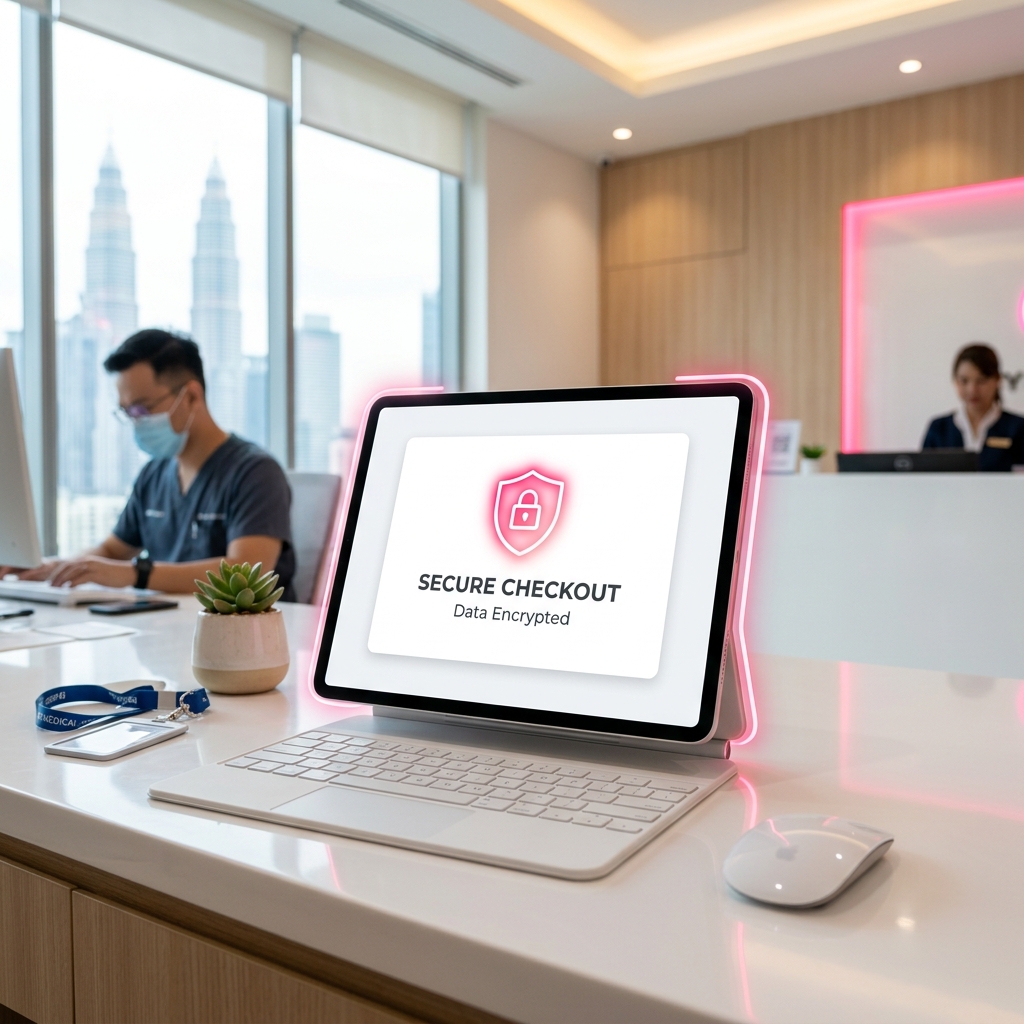
Malaysian clinics must secure e-commerce platforms using encrypted checkout systems that adhere strictly to the Personal Data Protection Act. Proper digital architecture ensures all patient commercial transactions and medical history data remain confidential against unauthorized access.
Establishing a secure medical e-commerce foundation prevents unauthorized breaches of sensitive patient information. Clinical digital marketing efforts are meaningless if the underlying digital infrastructure exposes buyers to financial risks or privacy violations.
“A single data breach during checkout can irreparably damage patient trust. PDPA compliance is the non-negotiable foundation of clinical e-commerce.” — Healthcare Technical Lead, Lamanify
Navigating Digital Patient Privacy Constraints
Secure digital architecture requires implementing SSL certificates across the entire domain. Medical establishments must guarantee that any submitted health information during account creation is protected through enterprise-grade encryption.
Checkout Encryption Standards
Integrating secure payment gateways is mandatory to protect financial data during transactions. Furthermore, practitioners must enforce explicit patient consent protocols before storing any personal details, ensuring all data collection aligns with federal privacy mandates.
2. Medical Advertising and Regulatory Compliance
The Ministry of Health requires that all online medical advertising claims remain accurate and substantiated. Securing a Medicine Advertisements Board approval number guarantees your clinical website legally displays health product benefits without risking regulatory penalties or closures.
Navigating healthcare e-commerce Malaysia requires meticulous attention to national advertising laws. Any showcased treatment efficacy or supplement benefit must be formally verified (Subject to KKLIU advertising guidelines). Displaying unverified claims can lead to immediate operational suspensions.
“When KKLIU compliance fails on launch, the cost is 6-12 months of advertising downtime.” — Healthcare Marketing Compliance Lead, Lamanify
Substantiating Clinical Efficacy Online
Practitioners must actively remove all unsubstantiated efficacy claims from their digital storefronts. Following a comprehensive KKLIU guideline helps ensure that clinical descriptions emphasize factual medical utility rather than absolute guarantees.
Audit Protocols for E-Commerce Content
Maintaining ongoing KKLIU compliance online requires routinely reviewing digital inventory for expired regulatory approvals. The valid approval number must always be displayed clearly alongside relevant medical products to maintain full transparency.
3. Ethical Marketing and Professional Conduct
Online medical sales must prioritize patient welfare over commercial gain to maintain professional standards. The Malaysian Medical Council dictates that practitioners exercise responsible judgment, ensuring all promoted clinical supplements genuinely support patient health outcomes without misleading claims.
Professional ethics remain paramount when venturing into pharmacy website development or broader clinic retail. Promoting clinical items must focus on educational guidance and evidence-based recommendations rather than aggressive sales tactics that pressure patients.
| Practice Area | Ethical & Compliant Standard | Non-Compliant Risk |
|---|---|---|
| Product Descriptions | Factual, evidence-based medical statements | Exaggerated or absolute cure claims |
| Sales Tactics | Educational guidance driven by clinical judgment | High-pressure or coercive digital prompts |
| Data Handling | Explicit patient consent acquired before checkout | Hidden data collection without authorization |
Preserving Patient Trust Digitally
Healthcare providers must separate objective educational medical content from hard sales pages. This distinction preserves professional integrity, assuring buyers that product recommendations serve their health interests first.
Responsible Clinical Endorsements
Whether discussing dermatological creams or engaging in dental clinic marketing for oral care devices, clinical judgment must dictate the online catalog. Offering items that genuinely resolve patient issues reinforces the practice’s reputation as a trustworthy medical authority.
4. Digital Patient Acquisition Strategies
Optimizing technical site structure and employing targeted healthcare SEO strategies helps clinics capture high-intent patient searches. Following standardized search engine guidelines ensures your medical e-commerce platform indexes correctly, driving sustainable organic traffic and enhancing digital patient acquisition.
Generating robust visibility requires adhering strictly to established technical site structure guidelines. Search algorithms prioritize platforms that offer fast load times, clear taxonomy, and mobile responsiveness.
Technical Optimization for Medical Catalogs
Structuring digital catalogs with clear descriptive categories improves both user experience and search indexability. Practices often leverage dedicated Healthcare SEO services to optimize product image alt text and target long-tail keywords specific to local clinical items.
Capturing Local E-Commerce Search Intent
Aligning your e-commerce platform with Google Business Profile representation guidelines helps capture localized commercial queries. Patients searching for nearby medical supplies are more likely to discover product pages that demonstrate clear local relevance and verified operational details.
5. Integrating Digital Administrative Services
Integrating an intelligent automated chat system provides instant responses to patient inquiries regarding clinical product availability. This digital integration streamlines the purchasing process, reduces administrative burden on clinic staff, and continuously captures patient leads securely and efficiently.
Clinic marketing thrives when digital tools seamlessly handle repetitive queries. Implementing automated interfaces ensures continuous engagement with prospective buyers exploring your digital catalog, allowing medical staff to focus entirely on patient care.
Reducing Administrative Load
Deploying conversational agents for routine product FAQ routing significantly lowers daily operational friction. Tools like a LamaniChat AI receptionist can instantly guide patients to the correct supplement pages or answer basic stock questions without human intervention.
Seamless Patient Inquiry Routing
To maximize efficiency, practitioners should connect these digital inquiry systems directly to secure patient scheduling tools. Utilizing a LamaniHub appointment system alongside WhatsApp automation ensures that if a patient needs a consultation before purchasing a specialized product, the booking process remains completely frictionless.
- Verify all medical product descriptions carry valid regulatory approval numbers.
- Implement a secure, privacy-compliant payment gateway for patient transactions.
- Optimize digital site architecture to meet search engine indexing requirements.
- Integrate an automated chat system to securely route basic product inquiries.
- Audit existing marketing copy to guarantee all clinical claims are accurate and substantiated.
Conclusion
A well-structured health product website allows Malaysian clinics to ethically expand patient access to clinical products. By ensuring strict regulatory adherence and robust digital security, practices can secure long-term revenue growth without compromising professional integrity.
Transitioning into digital medical retail demands both technical precision and uncompromising ethical standards. When properly executed, an optimized digital storefront becomes a reliable extension of your physical practice, serving patients safely and efficiently around the clock.
Ensure your clinical e-commerce strategy meets all regulatory standards while driving continuous revenue. Request a comprehensive clinic growth audit today to safely scale your online operations.
Frequently Asked Questions
What is required to sell health products online in Malaysia?
Clinics must comply with the Personal Data Protection Act for secure transactions and obtain KKLIU approval for any online medical advertising claims.
Can a dental clinic sell oral care products on its website?
Yes, provided the medical products are registered with the Ministry of Health and all marketing copy possesses Medicine Advertisements Board approval.
How does the PDPA affect clinical e-commerce platforms?
The Act mandates strict data encryption and explicit consent protocols when collecting patient details during the online checkout process.
What happens if an online medical claim is unsubstantiated?
The Ministry of Health Malaysia can issue severe fines, order immediate content removal, or suspend the clinic's operational licenses.
How can healthcare SEO improve product visibility?
Optimizing technical site architecture helps clinics rank higher for specific medical product searches, capturing targeted patient traffic organically.

Founder & Creative Director
Azri Omar
Azri is a seasoned digital marketer with over 10 years of experience in brand development and marketing strategies. Graduated with a Master's in Engineering (MEng.) from Sheffield, UK, Azri began his digital marketing journey during his studies, honing his skills in design, copywriting, and crafting impactful digital experiences. Today, he helps clients build professional and highly visible online presences, ensuring their brands thrive in a competitive digital landscape.