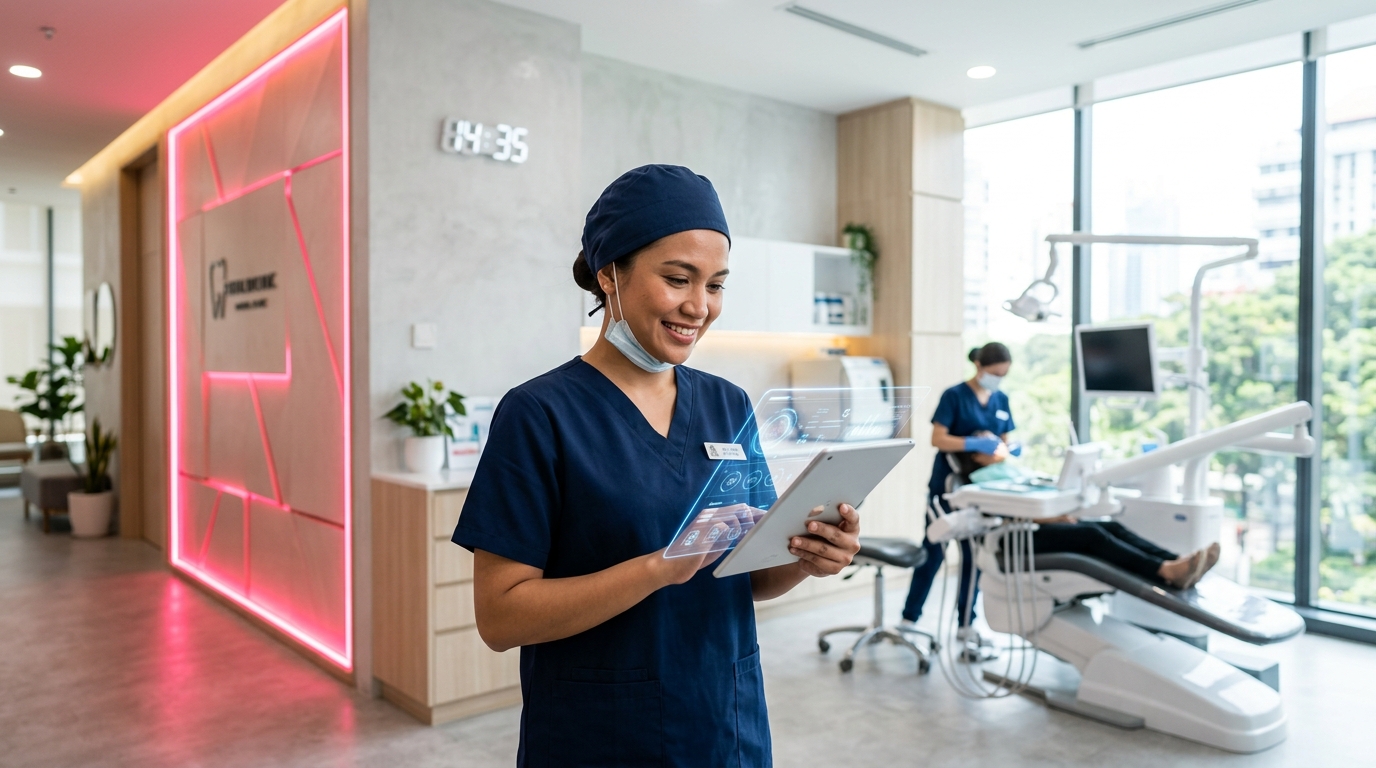
Quick Summary
- Core Concept: The Patient Trust Architecture
- Key Stat: Over 78% of prospective dental patients review a clinic's digital presence and practitioner credentials on mobile devices before booking their first consultation.
- Recommendation: Replace passive template sites with an interactive digital front door featuring verified practitioner profiles, clear fee schedules, automated appointment capture, and strict regulatory governance.
When an acute toothache strikes or a patient explores cosmetic aligners, their search begins on a smartphone screen, making strategic dental clinic website design the decisive factor in whether they book an appointment or visit a competitor. Private dental practices across Malaysia require digital platforms that address immediate clinical urgency, demonstrate practitioner expertise, and handle patient inquiries within seconds.
A practice website functions as an operational digital front desk rather than a passive marketing brochure. To convert high-intent local traffic into confirmed chair visits, the user experience must resolve patient anxiety while maintaining adherence to local regulatory frameworks, including the Personal Data Protection Act (PDPA) and Ministry of Health advertising standards.
Template-driven websites often look attractive in design portfolios but fail under operational conditions. When dental websites lack instant booking pathways, transparent fee ranges, or clear practitioner credentialing, potential patients abandon the page and contact the next nearby clinic.
“A clinic website that conceals fees and practitioner credentials creates immediate hesitation. Patients facing dental anxiety seek clarity and clinical credibility before they ever agree to sit in your chair.” — Healthcare Operations Consultant, Lamanify
1. The High-Converting Anatomy of a Dental Practice Homepage
A compliant dental homepage requires a distinct clinical value proposition, clinic operating hours, verified Malaysian Dental Council registration credentials, visible clinic address, and an immediate appointment booking action within the top viewport to convert urgent patient searches.
Patients navigating dental websites frequently experience acute physical discomfort or aesthetic self-consciousness. If contact details or operating hours sit buried beneath decorative sliders, visitors bounce back to the search engine results. Clear navigational architecture that organizes information logically aligns with foundational indexing best practices outlined in the Google Search Central: SEO Starter Guide.
Above-the-Fold Triage: Addressing Acute Tooth Pain in Seconds
The uppermost section of a dental practice homepage must serve as an intuitive clinical triage center. When severe tooth pain strikes after regular clinic hours, prospective patients need direct reassurance that care is accessible.
- Direct click-to-call emergency numbers and interactive messaging buttons positioned in the header.
- Prominent clinic operational hours, highlighting evening, weekend, or public holiday availability.
- Interactive support via tools such as the LamaniChat AI receptionist to resolve out-of-hours inquiries.
- Direct pathway links distinguishing urgent emergency triage from elective cosmetic treatments.
Trust Anchors: Practitioner Qualifications and Clinic Accreditations
Patients need assurance that their dental health rests in competent hands. Prominently presenting verified Malaysian Dental Council practitioner details and Annual Practising Certificate numbers directly beneath the main hero section establishes rapid clinical trust.
Promoting practitioner postgraduate qualifications, clinical focus areas, and formal accreditations reassures hesitant individuals. Highlighting sterilized operating environments and modern diagnostic equipment reassures anxious patients before their initial consultation.
2. Service Pages That Educate and Convert: Moving Beyond Generic Lists
Dedicated treatment pages must break down clinical indications, step-by-step procedure timelines, transparent fee estimates, recovery expectations, and factual risks. This detailed structure dispels patient fear while capturing specific high-intent organic search queries across local dental markets.
Consolidating every clinical offering into a single bulleted menu harms both patient comprehension and search engine discoverability. Individual service pages allow practices to address procedural nuances thoroughly, aligning with the principles set out in Google Search Central: Creating Helpful, Reliable, People-First Content.
Structuring Complex Treatments: Implants, Aligners, and Crowns
Patients researching restorative or aesthetic dentistry require thorough information before committing to high-investment procedures. Each procedure landing page must present factual timelines, clinical prerequisites, and follow-up requirements without making exaggerated clinical claims (subject to KKLIU advertising guidelines).
- Step-by-step procedure workflows detailing initial assessment, active treatment, and review phases.
- Transparent fee baselines to eliminate billing apprehension and qualify prospective inquiries.
- Clear outlines of potential risks and recovery expectations to satisfy informed consent principles.
- Educational guidance referencing factual compliance standards covered in our KKLIU guideline.
Addressing Dental Phobia: Pain Management and Sedation Details
Dental anxiety prevents thousands of prospective patients from seeking preventive and corrective oral care. Highlighting pain management protocols, topical anesthesia options, and gentle dentistry approaches directly dismantles treatment hesitation.
Explaining procedural comfort measures in straightforward, empathetic language reassures nervous patients. Transparently detailing modern techniques—such as digital scanning over physical impression trays—demonstrates patient-centered care and encourages hesitant individuals to book an evaluation.
3. Automated Patient Scheduling: Bridging the Website and the Clinic Chair
Direct integration with clinical appointment schedules captures patients during evening and weekend research windows. By offering real-time chair availability, automated SMS or WhatsApp confirmations, and calendar sync, practices capture bookings without increasing reception desk operational friction.
Relying exclusively on conventional phone calls during standard clinic hours restricts appointment intake. More than half of elective and emergency dental searches happen during evening hours when reception staff are offline. Deploying the LamaniHub appointment system enables clinics to capture inquiries directly into their operational calendar around the clock.
| Operational Dimension | Manual Telephone Intake | Integrated Digital Scheduling Architecture |
|---|---|---|
| Inquiry Window | Restricted to clinic operating hours (9:00 AM - 6:00 PM) | 24/7 capture including evening and weekend searches |
| Staff Burden | High; receptionists juggle chairside duties and phone calls | Automated calendar synchronization with minimal manual entry |
| Confirmation Workflow | Manual phone calls vulnerable to missed connections | Instant automated SMS and WhatsApp confirmation triggers |
| No-Show Rates | Frequent cancellations due to forgotten appointments | Significantly reduced through timed automated reminder sequences |
Eliminating Dental Chair Downtime with Real-Time Scheduling
Unfilled dental chair slots represent lost operational revenue that cannot be recovered. Real-time scheduling architectures display available treatment times accurately, allowing patients to select slots that align with their personal schedules.
Integrating deposit management protocols for lengthy restorative procedures filters out casual bookings while protecting clinical production schedules. Clear cancellation policies presented during the booking flow establish mutual accountability between clinic and patient.
Automating Reminders to Reduce Patient No-Shows
Missed appointments disrupt daily workflows and inflate practice overheads. Automated reminder sequences sent across reliable messaging channels help patients prepare for upcoming procedures and arrive on time.
Deploying specialized WhatsApp automation delivers pre-procedure reminders, fasting instructions for sedation cases, and clinic navigation pins directly to patient mobile devices, keeping attendance rates consistent.
4. Regulatory Compliance: Navigating KKLIU and PDPA in Web Design
Malaysian dental websites must comply with Ministry of Health advertising frameworks requiring factual, non-superlative claims substantiated by evidence, alongside Personal Data Protection Act 2010 rules mandating explicit consent checkboxes, published privacy policies, and encrypted storage for patient booking records.
Dental clinics operate under stringent oversight from statutory bodies including the Malaysian Dental Council, Malaysian Medical Council, and Ministry of Health Malaysia. Digital channels must avoid promotional hyperbole, misleading before-and-after imagery, or unverified claims of superior clinical outcomes.
Ministry of Health and Advertising Standards for Online Content
The Medicine Advertisements Board sets strict boundaries to prevent exploitative or inaccurate medical advertising. Content published on a clinic website must remain educational, objective, and clinically verifiable.
- Elimination of superlative marketing claims such as “leading,” “cheapest,” or “painless” treatments.
- Accurate descriptions of treatment outcomes accompanied by standard clinical disclaimers (subject to KKLIU advertising guidelines).
- Educational framing that advises patients to obtain a comprehensive physical examination before undertaking procedures.
- Maintenance of objective practitioner profiles focused on formal credentials rather than subjective praise.
PDPA 2010 Implementation: Safeguarding Patient Information Online
Collecting personal contact information, medical histories, and identification numbers via online forms introduces strict legal obligations under the Personal Data Protection Act 2010 (PDPA). Practices must handle clinical data responsibly to protect patient confidentiality.
- Mandatory opt-in consent checkboxes on all digital intake and booking forms.
- Prominently published privacy statements explaining data collection, storage, and processing protocols.
- Implementation of end-to-end HTTPS encryption protocols across all website data touchpoints.
- Secure database storage preventing unauthorized exposure of patient inquiry records.
5. Local Search Optimization: Dominating Area Searches for Dental Practices
Dental clinics dominate neighborhood search through synchronized Google Business Profile profiles, localized medical clinic schema markup, area-specific landing pages, and rapid mobile page speeds that satisfy Google search quality benchmarks and capture patients looking nearby.
Because dental procedures require physical visits, almost all relevant search queries carry distinct geographic intent. A dental clinic website design strategy must integrate technical on-page architecture with local visibility signals to attract patients within the immediate catchment area.
Optimizing the Google Business Profile and Local Map Pack Connection
Securing top placements in Google Local Map Packs drives a steady volume of routine cleanings, emergency treatments, and orthodontic evaluations. Practices must align their website data with verified profiles following the Google Business Profile Help: Guidelines for Representing Your Business on Google.
- Identical Name, Address, and Phone (NAP) details across website headers, footers, and Google profiles.
- Embedded local map markers paired with clear public transit directions and parking landmarks.
- Systematic collection of authentic patient reviews reflecting professional clinical care.
- Technical optimization supported by dedicated Healthcare SEO services to secure neighborhood search real estate.
Implementing MedicalClinic and Dentist Schema Markup
Structured data markup provides search engine crawlers with machine-readable context regarding your practice. By embedding specialized JSON-LD schema into your website code, search engines understand your precise medical specialty, accepted payment methods, and clinician rosters.
{
  "@context": "https://schema.org",
  "@type": "Dentist",
  "name": "Example Dental Specialist Clinic",
  "image": "https://exampleclinic.com.my/clinic-front.webp",
  "telephone": "+60-3-1234-5678",
  "address": {
    "@type": "PostalAddress",
    "streetAddress": "No. 12, Jalan Telawi 3, Bangsar",
    "addressLocality": "Kuala Lumpur",
    "postalCode": "59100",
    "addressCountry": "MY"
  },
  "openingHoursSpecification": [
    {
      "@type": "OpeningHoursSpecification",
      "dayOfWeek": ["Monday", "Tuesday", "Wednesday", "Thursday", "Friday", "Saturday"],
      "opens": "09:00",
      "closes": "18:00"
    }
  ]
}
Practical Implementation Checklist for Dental Clinics
Use this checklist to verify your clinic website combines technical performance, patient usability, and regulatory compliance:
- Publish complete practitioner profiles with verifiable Malaysian Dental Council registration details.
- Structure dedicated landing pages for each major clinical procedure with transparent fee guidance.
- Integrate an automated digital scheduling system with real-time chair synchronization.
- Add mandatory PDPA consent checkboxes and a accessible privacy policy on all intake forms.
- Remove all unsubstantiated superlative marketing claims to comply with Ministry of Health guidelines.
- Audit website loading speeds and local schema markup to secure dominant positions in Google Map searches.
“A compliant, high-performing clinic website is not an administrative cost; it is an enduring clinical asset that insulates your practice from rising advertising costs.” — Clinical Director, Lamanify Healthcare Advisory
Conclusion
Executing a methodical dental clinic website design strategy elevates a private practice from an obscure physical storefront into a respected, discoverable healthcare provider within its local community. When clinic websites combine rapid mobile load speeds, transparent procedural education, and automated scheduling workflows, they effectively resolve patient apprehension before the initial consultation.
Maintaining rigorous adherence to Malaysian healthcare regulatory standards and patient privacy protocols ensures your practice expands its patient base sustainably without regulatory disruption. By addressing patient fears transparently and simplifying appointment scheduling, Malaysian dental practices can maintain full appointment books month after month.
To evaluate your clinic’s digital presence, appointment conversion paths, and local search performance, Request a Comprehensive Clinic Growth Audit with our healthcare digital team today.
Frequently Asked Questions
What essential features must a dental clinic website in Malaysia include?
A high-performing dental website requires real-time appointment booking, clear treatment pricing transparency, verified dentist credentials, mobile-first responsive architecture, Google Map integration, and prominent compliance disclosures under KKLIU guidelines.
Do Malaysian dental clinic websites require KKLIU advertisement approval?
Websites functioning as static informational brochures detailing clinic location, dentist qualifications, and standard service directories generally do not require prior Medicine Advertisements Board permits, but promotional campaigns, discounts, or comparative claims require formal approval under KKLIU rules.
How can a dental practice ensure patient data privacy on booking forms?
Websites collecting patient names, contact numbers, and appointment details must comply with the Personal Data Protection Act 2010 by presenting explicit consent checkboxes, publishing a comprehensive privacy policy, using end-to-end HTTPS encryption, and preventing unauthorized third-party tracker data leaks.
Why do generic website templates fail for private dental clinics?
Generic templates lack integration with dental management systems, fail to address dental anxiety through specialized user experience layouts, carry bloated code that degrades mobile performance, and ignore Malaysian medical advertising restrictions.
What technical factors help a dental practice website rank in local Google search?
Local ranking success relies on localized schema markup, synchronized Google Business Profile name, address, and phone data, fast Core Web Vitals performance, dedicated treatment landing pages, and natural localized backlinks from Malaysian healthcare directories.

Healthcare Content Specialist
Sarah
Sarah is a healthcare digital content specialist at Lamanify, focusing on Malaysian clinic compliance (KKLIU & PDPA), patient intake workflows, and medical practice marketing.