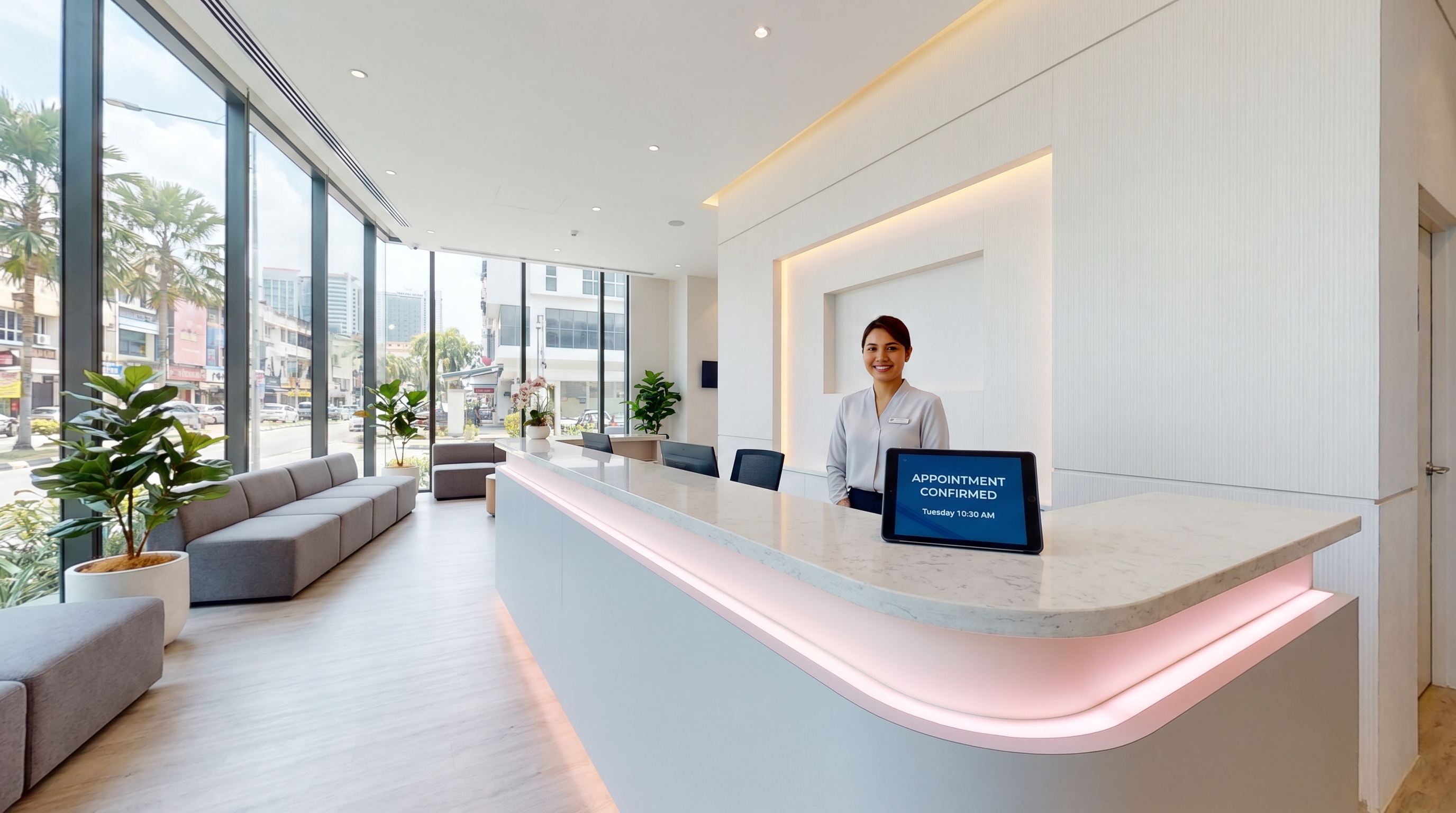
Quick Summary
- Core Concept: The Automated Patient Operations Framework provides a comprehensive approach to modernizing healthcare administration by replacing manual processes with intelligent digital solutions.
- Key Stat: Clinics implementing dedicated automated scheduling systems frequently report a drastic reduction in patient no-show rates, directly recovering thousands in otherwise lost monthly revenue.
- Recommendation: Transition away from generic administration tools by integrating a specialized AI medical receptionist system that seamlessly connects your marketing initiatives to your secure patient intake pipeline.
Implementing clinic front-desk automation is one of the most effective ways for Malaysian practices to streamline operations. By automating repetitive administrative tasks—such as answering FAQs, checking availability, and scheduling appointments—clinics can operate 24/7 without burning out their staff.
In today’s highly competitive healthcare landscape, relying solely on manual processes leaves your staff overwhelmed and your patients waiting. Medical receptionists face massive burnout managing endless instant messaging inquiries, while human scheduling errors inevitably lead to lost revenue through missed appointments and high no-show rates.
The financial stakes of outdated administration are severe, especially when modern patients expect immediate responses and seamless digital experiences. Furthermore, practices must navigate these operational challenges while maintaining strict adherence to complex local data privacy and advertising regulations mandated by the Ministry of Health Malaysia.
Addressing these compounding issues requires a specialized approach. By leveraging integrated tools, clinic owners can transform their front desk from a costly administrative bottleneck into a streamlined, automated growth engine that enhances both patient acquisition and practice profitability.
1. The Hidden Costs of a Manual Front Desk in Malaysian Clinics
Operating a traditional manual front desk significantly damages clinic profitability through human error and staff burnout. Studies show that missed patient appointments and delayed inquiry responses cost healthcare facilities thousands annually, particularly when receptionists are overwhelmed during peak operating hours.
When healthcare operations in Malaysia rely heavily on manual data entry, the risk of staff exhaustion skyrockets. Managing endless patient communications without digital support creates an unsustainable environment for front desk teams, leading directly to high staff turnover and administrative bottlenecks.
“When administrative burnout causes delayed responses, the true cost is the permanent loss of patient trust and subsequent clinical revenue.” — Healthcare Consultant, Lamanify
These manual inefficiencies directly undermine even the most well-planned clinic marketing guideline strategies. Generating leads is only half the battle; if your administrative team cannot process them swiftly, those prospective patients will simply book with a competing practice.
The True Price of Administrative Burnout
Staff burnout remains a primary driver of operational failure in modern medical facilities. Constantly answering repetitive questions while attempting to manage in-person patients forces receptionists to split their attention, degrading the overall quality of care provided within the waiting room.
- Staff burnout and high turnover among medical receptionists
- Lost revenue from unanswered inquiries and long wait times
- The compounding problem of patient no-shows and scheduling errors
Quantifying the Impact of Missed Appointments
Every unattended inquiry or forgotten appointment compounds your operational losses. A lack of immediate follow-ups ensures that patient no-shows remain persistently high, severely capping the scaling potential of ambitious healthcare practices.
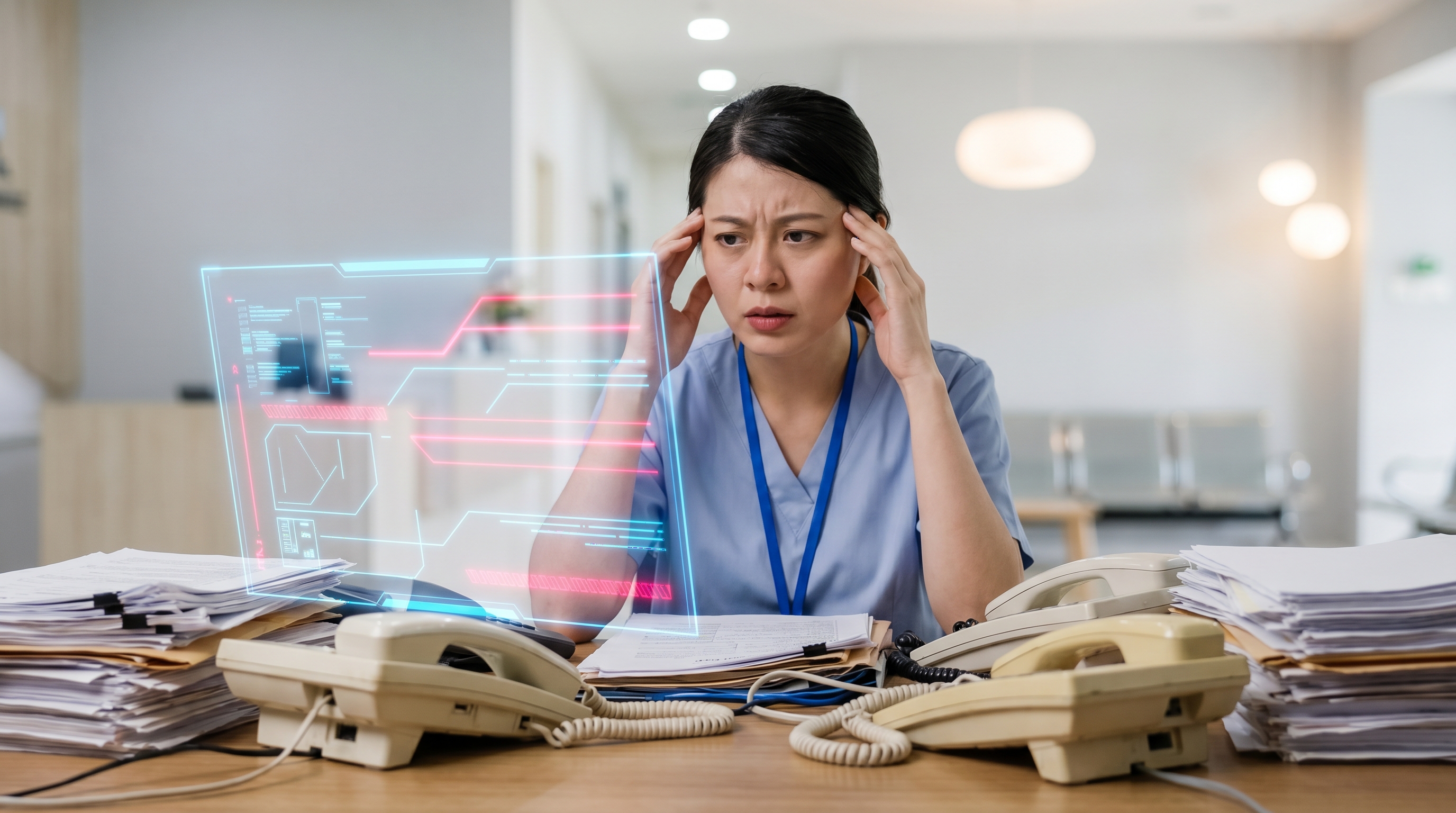
Manual processes lead to burnout; automation provides clarity and calm.
2. What is Clinic Front Desk Automation?
Clinic automation extends far beyond basic management software by utilizing advanced integrations to handle communications. It seamlessly connects patient intake processes with your core operations, allowing an intelligent AI system to schedule appointments, send reminders, and answer routine medical inquiries automatically.
Many clinic owners mistakenly believe that basic digital calendars are sufficient for modern dental clinic marketing and operations. True automated clinic scheduling, however, employs sophisticated n8n workflows to completely eliminate the need for manual data transfer between disparate platforms.
According to global health administration resources like the WHO, optimizing facility administration is key to improving overall patient outcomes. By bridging operational gaps, automated systems ensure that a patient’s transition from initial digital contact to the physical examination room is entirely frictionless.
Defining the Automated Patient Pipeline
An intelligent patient pipeline captures inquiries from multiple digital channels and centralizes them. This seamless connection transforms marketing data directly into actionable patient intake records, removing the administrative friction that typically causes booking drop-offs.
- Moving beyond basic Clinic Management Software (CMS)
- The role of AI and n8n automated workflows in modern healthcare
- Connecting marketing data seamlessly to patient intake
The Shift from Manual Entry to AI Assistance
Transitioning to AI medical receptionist software means shifting from reactive administration to proactive patient management. Instead of staff manually logging every appointment detail, the system inherently processes the booking, verifies availability, and updates the central database instantly.
3. Must-Have Features for Automating Patient Operations
An effective digital receptionist system must feature multilingual capabilities, providing instant support in both English and locally relevant contexts. Furthermore, integrating smart appointment scheduling and automated reminders is critical for permanently reducing high patient no-show rates across your medical practice.
To truly optimize patient acquisition, your chosen software must incorporate specifically engineered features that address local operational realities. Self-serve patient portals and intelligent triage systems ensure that routine questions are answered instantly, reserving human intervention solely for complex medical needs.
Implementing WhatsApp automation is often the first critical step in modernizing patient communication. By deploying automated messaging algorithms, clinics can guarantee that every prospective patient receives immediate acknowledgment and booking instructions regardless of the time of day.
The Power of Instant Multilingual Communication
Given the diverse demographics of local patients, a one-size-fits-all language approach severely limits your reach. Providing 24/7 multilingual AI support ensures that all patients receive clear, immediate assistance, which significantly enhances their trust in your facility.
- 24/7 Multilingual AI Receptionists with local language support
- Smart Appointment Scheduling and Automated Reminders
- Self-serve patient portals and instant FAQs for common inquiries
Eradicating No-Shows with Smart Reminders
Smart scheduling algorithms do more than just book calendar slots; they actively manage attendance. By sending strategically timed automated reminders, clinics can prompt patients to confirm or reschedule easily, effectively eliminating the primary cause of daily revenue leakage.
| Feature | Manual Front Desk | Automated Patient Operations |
|---|---|---|
| Inquiry Response Time | Hours to days, limited by operating hours | Instant, available 24/7 |
| Appointment Scheduling | Prone to double-booking and human error | Real-time synchronization and smart booking |
| Patient Follow-ups | Inconsistent, reliant on staff availability | Automated SMS and WhatsApp reminders |

Ensuring patient data security is paramount in every automated workflow.
4. Navigating Healthcare Compliance with Patient Data
Any technological implementation must strictly adhere to the Personal Data Protection Act to ensure absolute patient data security. Additionally, automated marketing communications must align with the Ministry of Health Malaysia and KKLIU guidelines, which require all medical claims to be accurate and fully substantiated.
Using generic international software often exposes local practices to severe compliance risks. A localized approach requires implementing PDPA compliant clinic software that utilizes advanced encryption to safeguard sensitive medical records from unauthorized access. (Subject to KKLIU advertising guidelines, no automated system should ever promise absolute treatment guarantees or unsubstantiated medical outcomes).
It is vital to consult resources provided by the Malaysian Medical Council to ensure your operational tools align with ethical standards. Furthermore, detailed advertising parameters can be referenced through the KKLIU info portal.
Protecting Patient Information Under PDPA
Safeguarding patient information goes beyond basic passwords; it requires a comprehensive infrastructural commitment to data security. Your chosen automation tools must inherently enforce privacy protocols, ensuring that sensitive communications remain strictly confidential between the patient and the licensed clinician.
- Ensuring absolute patient data security with PDPA-compliant software
- Adhering to KKLIU guidelines for automated marketing and communication
- Why generic international software often fails local clinics
Maintaining Substantiated Claims in Automated Marketing
Automated communication workflows must be carefully audited to maintain regulatory integrity. As outlined in comprehensive KKLIU guidelines, any programmed responses regarding treatment efficacy must be fully substantiated by clinical evidence and must strictly avoid promotional exaggeration.
5. How Lamanify Transforms Clinic Operations
Lamanify revolutionizes healthcare administration through dedicated platforms like LamaniChat and LamaniHub. By deploying these specialized, SEO-first appointment ecosystems connected via custom integrations, medical facilities can completely eliminate operational bottlenecks, reduce administrative overhead, and seamlessly convert marketing traffic into booked patients.
Positioning a robust technological framework is the definitive alternative to exhausting manual workflows. Our comprehensive toolset actively bridges the critical gap between initial patient discovery and finalized front desk conversions, driving measurable growth without requiring additional administrative headcount.
“When KKLIU compliance fails on launch, the cost is 6-12 months of advertising downtime. Automated systems must have compliance built into their DNA from day one.” — Healthcare Marketing Compliance Lead, Lamanify
Deploying a custom LamaniChat AI receptionist allows your practice to engage website visitors instantly. This intelligent system triages basic medical inquiries and securely routes high-intent patients directly into your booking calendar, operating flawlessly around the clock.
Unifying the Patient Journey with LamaniHub
The transition from a casual online search to a confirmed patient requires frictionless software. By implementing the LamaniHub appointment system, clinic directors can unify their operations under one cohesive, search-optimized platform that guarantees a seamless user experience.
- LamaniChat: Deploying your intelligent AI Medical Receptionist
- LamaniHub: A cohesive, SEO-first appointment ecosystem
- Custom n8n integrations to bridge your marketing and clinic operations
Deploying LamaniChat for Instant Patient Engagement
Engaging patients at their peak moment of interest drastically increases conversion rates. Intelligent chatbots provide instant, accurate answers to common procedural questions, directly supporting your broader clinic marketing efforts while reserving your human staff for vital in-person care.
- Audit your current WhatsApp inquiry volume and response times.
- Identify specific administrative tasks causing the highest staff burnout.
- Implement an AI receptionist capable of handling automated appointment scheduling.
- Verify that your new software fully complies with PDPA data regulations.
- Integrate your front desk tools directly with your marketing channels.
Conclusion
Automating your clinic’s front desk is no longer a luxury; it is a critical necessity for scaling your practice in a competitive market. By embracing an intelligent digital framework, you eliminate administrative bottlenecks that drive patient no-shows and staff burnout.
When you fully integrate clinic front desk automation malaysia into your core operations, you empower your medical personnel to focus exclusively on providing exceptional healthcare. Transitioning to these secure, compliant systems protects your data while maximizing your facility’s revenue potential.
Ready to eliminate front-desk bottlenecks and permanently reduce patient no-shows? Discover how our customized healthcare automations work and secure your consultation.
Frequently Asked Questions
What is an AI medical receptionist?
An AI medical receptionist is an automated software system designed to handle patient inquiries, schedule appointments, and manage administrative communications for clinics around the clock without requiring direct human intervention.
How does automation reduce clinic no-shows?
Automation reduces no-shows by sending instant booking confirmations and timely automated reminders via messaging platforms, ensuring patients remember and commit to their scheduled appointments.
Are automated clinic systems PDPA compliant?
Yes, reputable automated clinic systems are built to comply with the Personal Data Protection Act, employing advanced encryption and secure data handling procedures to protect sensitive patient information.
Does clinic automation replace human staff?
No, clinic automation does not replace human staff. Instead, it handles repetitive administrative tasks, allowing your medical receptionists to focus exclusively on providing high-quality, in-person patient care.
How long does it take to implement LamaniChat?
Implementing LamaniChat typically takes only a few weeks, involving custom configuration, integration with your existing management software, and staff training to ensure a seamless operational transition.

Founder & Creative Director
Azri Omar
Azri is a seasoned digital marketer with over 10 years of experience in brand development and marketing strategies. Graduated with a Master's in Engineering (MEng.) from Sheffield, UK, Azri began his digital marketing journey during his studies, honing his skills in design, copywriting, and crafting impactful digital experiences. Today, he helps clients build professional and highly visible online presences, ensuring their brands thrive in a competitive digital landscape.