
Quick Summary
- Core Concept: The Automated Patient Retention Framework demonstrates how replacing manual communication with automated reminders and self-scheduling tools instantly eliminates front-desk administrative bottlenecks.
- Key Stat: Deploying the LamaniHub appointment ecosystem reduced daily patient no-shows by 60 percent within the crucial first thirty days of implementation.
- Recommendation: Transition immediately to a PDPA-compliant scheduling platform with robust n8n automation capabilities to recover lost clinic revenue and drastically improve the digital patient experience.
An appointment booking system case study clinic analysis reveals how automated patient self-scheduling transforms healthcare operations. To reduce clinic no-shows and administrative overload, clinic owners should deploy a centralized platform that manages real-time availability, sends automated reminders, and synchronizes effortlessly with existing medical workflows.
Private practices across Malaysia face a growing operational crisis as dedicated front-desk administrators struggle to manage hundreds of daily text messages and fragmented manual paper logbooks.
This outdated manual approach not only leads to severe staff burnout but also directly damages operational revenue whenever scheduled patients forget appointments or abandon an overly complicated booking process.
By exploring the automated patient self-scheduling frameworks detailed in this study, practice managers will discover how replacing chaotic methods with specialized scheduling software dramatically improves both patient satisfaction and operational scalability. To understand your current baseline, securing a clinic growth audit is a critical first step.
1. Appointment Booking System Case Study Clinic Context: The Hidden Costs of Manual Scheduling
Manual clinic scheduling creates severe operational bottlenecks by relying on fragmented messaging conversations and scattered paper logbooks. This outdated process increases patient wait times, overloads front-desk administrators, and directly causes significant revenue loss through unmanaged patient no-shows across Malaysian healthcare facilities.
The True Cost of an Empty Waiting Room
Relying on legacy methods for patient scheduling silently drains clinic resources while frustrating modern patients who expect instant digital convenience. Every missed slot represents an irretrievable loss in clinic operational efficiency. When procedures like aesthetic enhancements or specialized medical consultations are delayed—which are always offered strictly based on clinical suitability (Subject to KKLIU advertising guidelines)—the compound financial toll over a fiscal year becomes staggering.
Recognizing Outdated Patient Intake Workflows
Delayed communication directly leads to abandoned bookings. As patients wait hours for manual confirmation texts, they frequently seek care at competing facilities with instant digital booking capabilities.
To resolve these bottlenecks, clinics must evaluate their current intake infrastructure:
- Quantifying the financial impact of every missed appointment across medical departments.
- Auditing the limitations of physical logbooks and unstructured patient chats.
- Measuring how delayed responses lead to abandoned bookings and lost patient acquisition opportunities.
Standardized workflows recommended by the Ministry of Health Malaysia emphasize efficient facility management, highlighting the need for modernization.
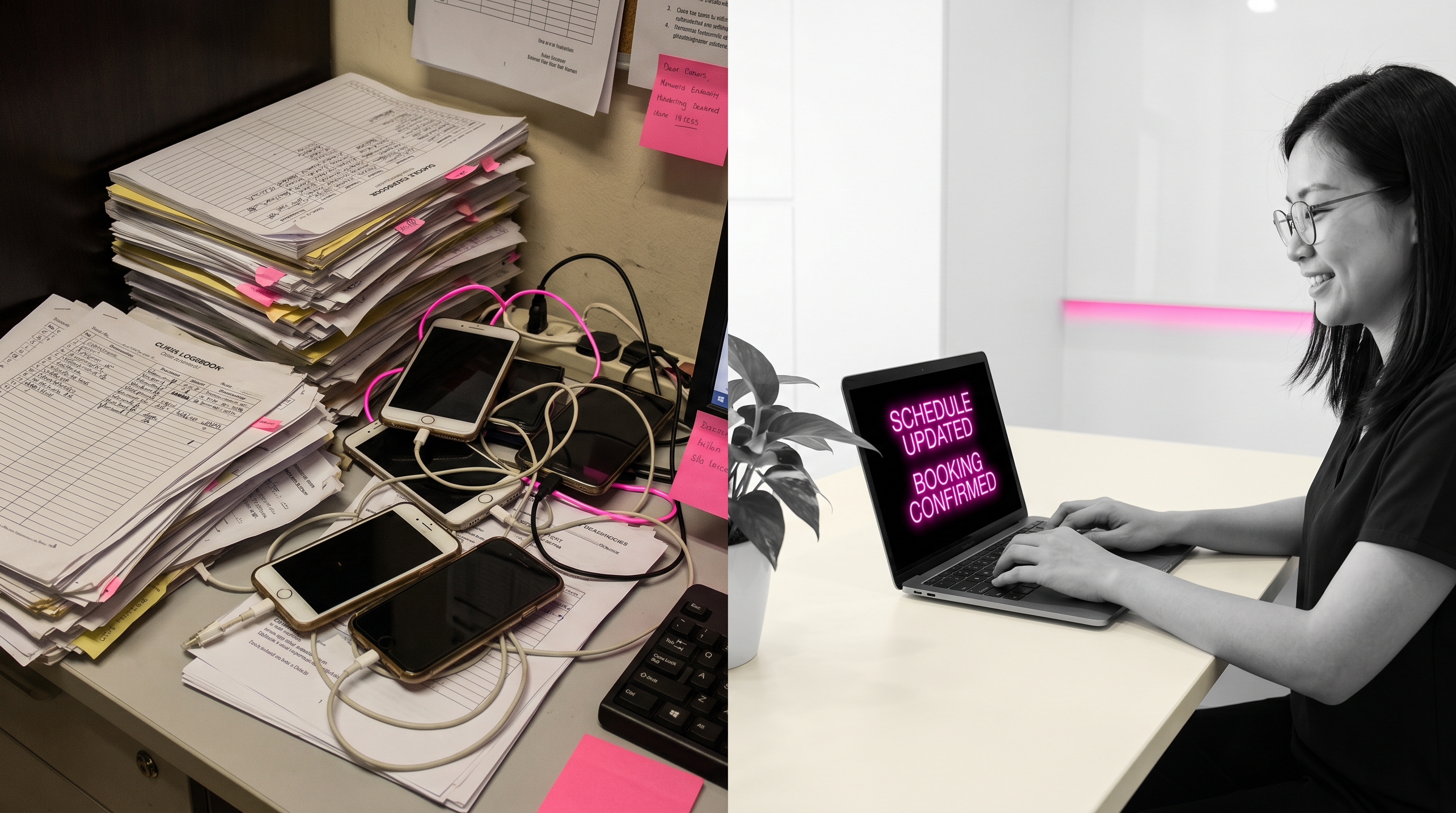
Moving from fragmented paper processes to centralized digital systems reduces administrative overload.
2. The Challenge: Front-Desk Burnout and Missed Opportunities
Front-desk burnout in medical clinics occurs when administrative staff manage overwhelming volumes of unstructured digital communication instead of focusing on direct patient care. Without an automated platform handling routine inquiries, clinics experience slower response times and higher rates of missed appointments.
Identifying the Symptoms of Administrative Overload
When administrative staff act as human scheduling engines, human error inevitably increases alongside workplace exhaustion. The daily grind of confirming and rescheduling via text messages draws focus away from patients physically present in the waiting room. This directly correlates with poor data entry, scheduling overlaps, and ultimately, compromised patient satisfaction.
“When front-desk staff act as human scheduling engines, human error inevitably increases. Transitioning to automated patient self-scheduling instantly reclaims hours of lost productivity.” — Healthcare Operations Consultant, Lamanify
The WhatsApp Trap for Malaysian Clinics
Patient frustration peaks when communication is delayed. A fragmented approach relying on basic smartphone apps creates a disorganized patient experience. Moving toward WhatsApp automation bridges this gap, ensuring instant replies to scheduling inquiries while eliminating the chaos of manual triage.
3. Implementing LamaniHub’s Centralized Booking Platform
LamaniHub functions as a comprehensive automated appointment booking system that seamlessly integrates patient self-scheduling with secure, PDPA-compliant backend operations. By utilizing advanced n8n automations, it directly synchronizes reminders and instantly updates clinic availability without requiring manual staff intervention.
Structuring an Automated Reminder Sequence
To resolve systematic inefficiencies, the clinic adopted an integrated, technology-first approach. Deploying secure, patient-facing self-scheduling portals allows patients to view real-time availability. The system is enhanced by integrating a LamaniChat AI receptionist to handle initial inquiries, instantly guiding patients to the secure booking link.
Securing Patient Data Compliance
Adhering to the Personal Data Protection Act (PDPA) is non-negotiable for modern healthcare software. The LamaniHub appointment system ensures that all digital patient records and scheduling data are heavily encrypted. Clinics must ensure their platforms meet the strict confidentiality standards outlined by the Malaysian Medical Council.
| Feature | Manual Scheduling Workflow | Automated Booking Platform |
|---|---|---|
| Patient Reminders | Manually typed and sent by front desk | Triggered automatically via n8n workflows |
| Data Security | Vulnerable physical logbooks | Fully encrypted, PDPA-compliant digital records |
| Availability Updates | Prone to human error and double-booking | Real-time synchronization across all devices |
| Staff Workload | High burnout from continuous triage | Minimal intervention; staff focus on care |

Automated workflows ensure patients receive timely reminders without manual staff intervention.
4. The Results: Achieving a 60% Drop in Patient No-Shows
Deploying an automated scheduling system reduced patient no-shows by 60 percent within the first month. This immediate improvement allowed the clinic to recover thousands in previously lost revenue while simultaneously improving overall patient satisfaction through convenient, zero-friction digital booking experiences.
Calculating Scheduling Automation ROI
The immediate operational impact of transitioning to an automated booking infrastructure fundamentally transformed the clinic’s bottom line. Analyzing the rapid 30-day recovery of lost revenue demonstrated the precise return on investment. Furthermore, practice managers successfully tracked reclaimed administrative hours, allowing staff members to redirect their energy toward actual clinic marketing and direct patient interactions.
The Impact on Patient Care Quality
Patients widely reported positive feedback regarding the booking ease. Key outcomes included:
- Tracking improved patient satisfaction metrics across post-visit surveys.
- Reducing physical waiting room congestion due to perfectly timed arrivals.
- Establishing a reliable communication loop for pre-visit instructions.
5. Strategic Takeaways for Malaysian Healthcare Providers
Modern Malaysian clinics must prioritize strict PDPA compliance when digitizing patient records. Adopting secure appointment booking software ensures patient data remains protected while empowering healthcare providers to safely scale their digital marketing operations in full accordance with Ministry of Health regulations.
Scaling Without Adding Administrative Headcount
For competing clinics, this case study serves as a practical blueprint for modernizing patient acquisition and retention infrastructures. Manual scheduling restricts sustainable business growth. By integrating scheduling platforms with broader healthcare SEO services, clinics capture high-intent web traffic and instantly convert them into confirmed consultations.
“Digital transformation is no longer optional for clinics looking to scale. An integrated, compliant booking engine forms the foundation of any modern patient acquisition strategy.” — Healthcare Marketing Compliance Lead, Lamanify
Aligning Technology with Healthcare Regulations
Digitizing operations demands strict alignment with national guidelines. Understanding the KKLIU guideline is essential, as all medical claims and treatment promotions must be substantiated and accurate. For further clarification on authorized advertising formats, clinic managers should consult the KKLIU info portal.
- Audit existing manual scheduling processes to identify weekly administrative hours lost to text coordination.
- Implement a centralized booking platform that integrates directly into your clinic’s primary SEO-optimized website.
- Configure automated patient reminders to deploy 24 hours prior to scheduled medical appointments.
- Ensure the chosen appointment management system fully complies with the strict requirements of the Personal Data Protection Act.
- Retrain front-desk administrators to monitor automated patient workflows rather than manually transcribing appointment details.
Conclusion
Transitioning away from manual scheduling to a professional digital infrastructure is the fastest strategy to reclaim lost clinic revenue. The insights from this appointment booking system case study clinic framework prove that automating patient reminders and self-scheduling pathways drastically improves operational resilience.
By eliminating costly front-desk burnout and streamlining the digital patient experience, Malaysian practices can secure a decisive competitive advantage while maintaining full regulatory compliance.
Ready to eliminate empty slots and streamline your front desk? Discover how our appointment booking system can recover lost revenue and transform your clinic’s operations today.
Frequently Asked Questions
How does an appointment booking system reduce clinic no-shows?
An automated scheduling platform automatically sends targeted WhatsApp and SMS reminders prior to the visit, allowing patients to easily confirm or reschedule their time slots.
Is the LamaniHub appointment system compliant with Malaysian regulations?
Yes, LamaniHub integrates advanced security protocols to ensure all patient scheduling data aligns perfectly with the Personal Data Protection Act (PDPA).
Can automated scheduling integrate directly with my clinic's existing website?
Absolutely. Modern booking systems easily embed into your clinic's web pages, enabling patients to securely select available appointment times directly from their smartphones.
Does automating appointment booking replace front-desk administrators?
No, it supports front-desk staff by eliminating repetitive manual data entry, enabling administrators to concentrate fully on delivering exceptional in-person patient care.

Founder & Creative Director
Azri Omar
Azri is a seasoned digital marketer with over 10 years of experience in brand development and marketing strategies. Graduated with a Master's in Engineering (MEng.) from Sheffield, UK, Azri began his digital marketing journey during his studies, honing his skills in design, copywriting, and crafting impactful digital experiences. Today, he helps clients build professional and highly visible online presences, ensuring their brands thrive in a competitive digital landscape.